

The daughter of farmers in Bhutan's remote Gangtey Valley, as a child Phub Lham never imagined that her home, which had no electricity or water, nor even road access, would one day open its doors to the world. ‘The furthest I've ever travelled is to Thimphu, Bhutan's capital,’ she says, ‘and that was back when I was a little girl.’ Since transforming her family abode into a goen chim, or homestay, Phub has welcomed visitors from India, Japan, Russia, Germany, Australia, America and the UK. ‘I didn't go to school and, as a simple farmer, having the world come to me through my guests is fascinating. I am curious about these visitors and their mannerisms.’
About 50 years ago, when Phub was 12, her mother built the house on land she inherited from her own. As Bhutan is one of the only countries in South Asia to have a predominantly matriarchal society where matrilineal inheritance and matrilocal traditions prevail, future custodians of the home will likely continue to be women.
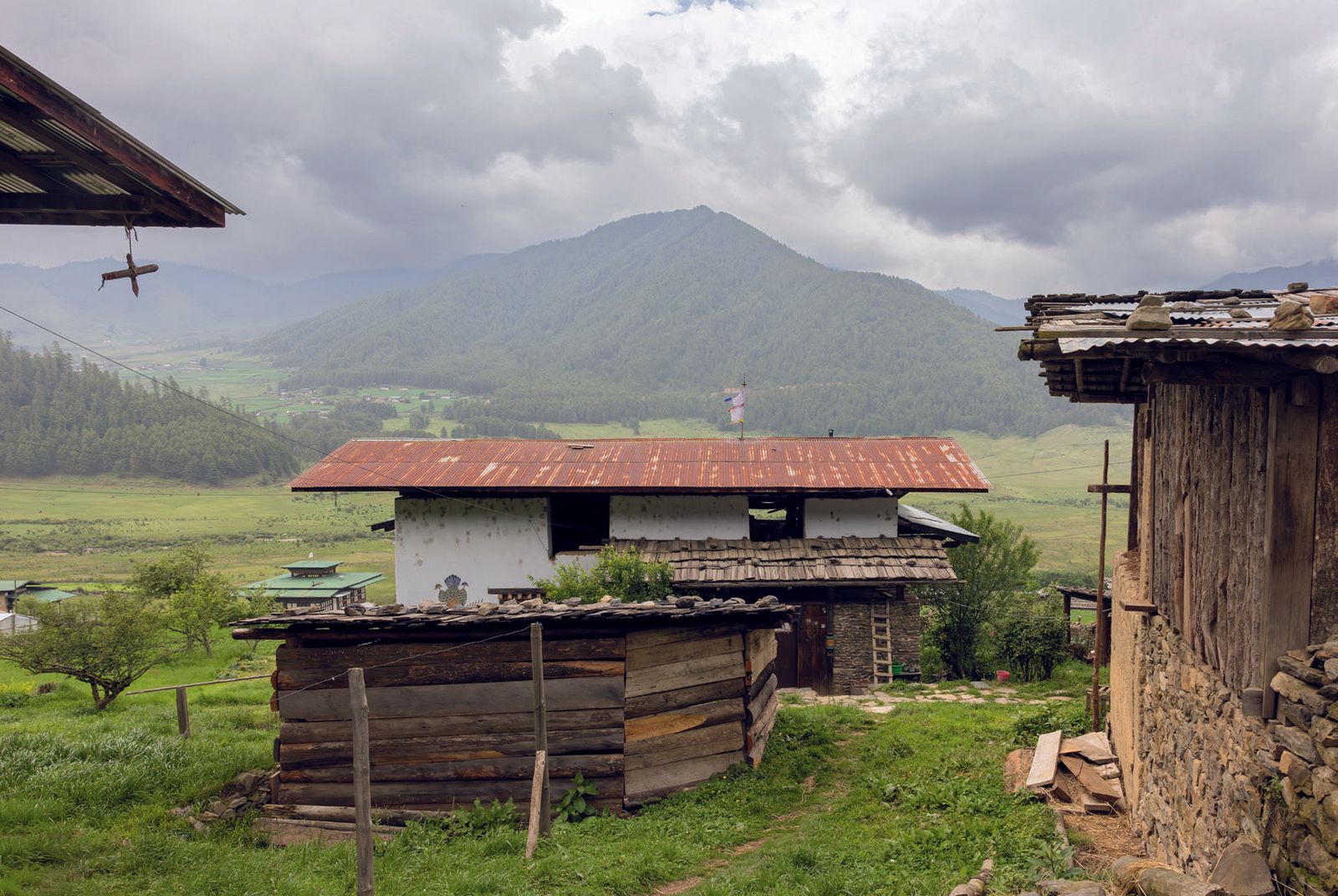
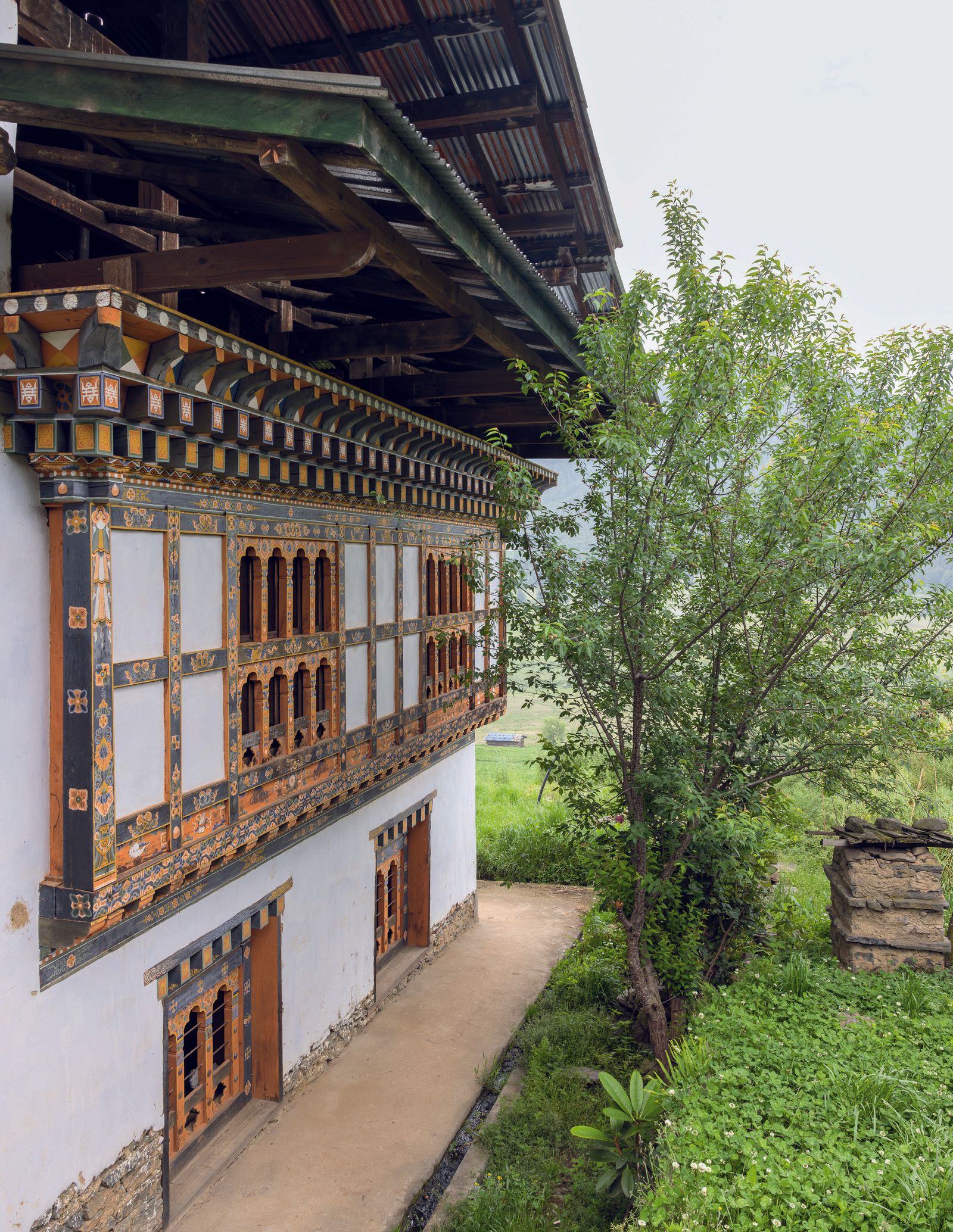
In common with most village buildings, the house's construction was a communal effort. Men felled timber from the forests, hauling it to the site with ropes, then chopping and sawing it to size. Without so much as a blueprint, indigenous engineers and artisans relied purely on instinct, experience and locally sourced materials – Indian nails being the sole import here – to make Phub's mother's dream real. The base and supporting plinth are made of stone to keep groundwater away from the upper mud walls, which are naturally insulating and regulate temperatures; the flexibility of the timber framework, meanwhile, helps the building withstand the country's bouts of seismic activity.
Phub remembers standing atop the unfinished house as a girl with her mother, sisters and other village women, pounding poles in hand to tamp the mud walls. As befitted the occasion, the energy surrounding the construction was jubilant and upbeat, she recalls, with much laughter, banter and flirting among the women and men as they entered into tsangmos (a traditional form of short poetry sung as a dialogue), vocal duels and lyric verse.
For more than 20 years after its completion, the farmhouse served as a working homestead, with cattle on the ground floor, family upstairs, hay stored in the rafters above. Living beside the livestock served a dual purpose: the beasts' rising body heat helped keep the humans above warm through harsh winters (Gangtey is a glacial valley 3,000 metres above sea level), while they were protected from wild animals. Only recently, tigers and leopards have been spotted locally, along with red pandas, musk deer, takin and the black-necked cranes that migrate for the winter all the way from Tibet. The government eventually forbade the practice of keeping animals in the home on hygiene grounds.
Like her parents, Phub and her husband, Tandi, subsisted on the buckwheat, wheat and potatoes they grew, as well as milk and cheese from their yaks and cows, but as the years passed it became harder to make ends meet. Happily, Gangtey is blessed not only with breathtaking wide-open alpine landscapes but also deep spiritual significance. It is home to a 17th-century monastery of the Nyingmapa school, the oldest of the four major traditions of Tibetan Buddhism, and lies in the protected Black Mountains. As tourism to the valley grew, Phub and Tandi were well placed to benefit from the rising demand for accommodation.
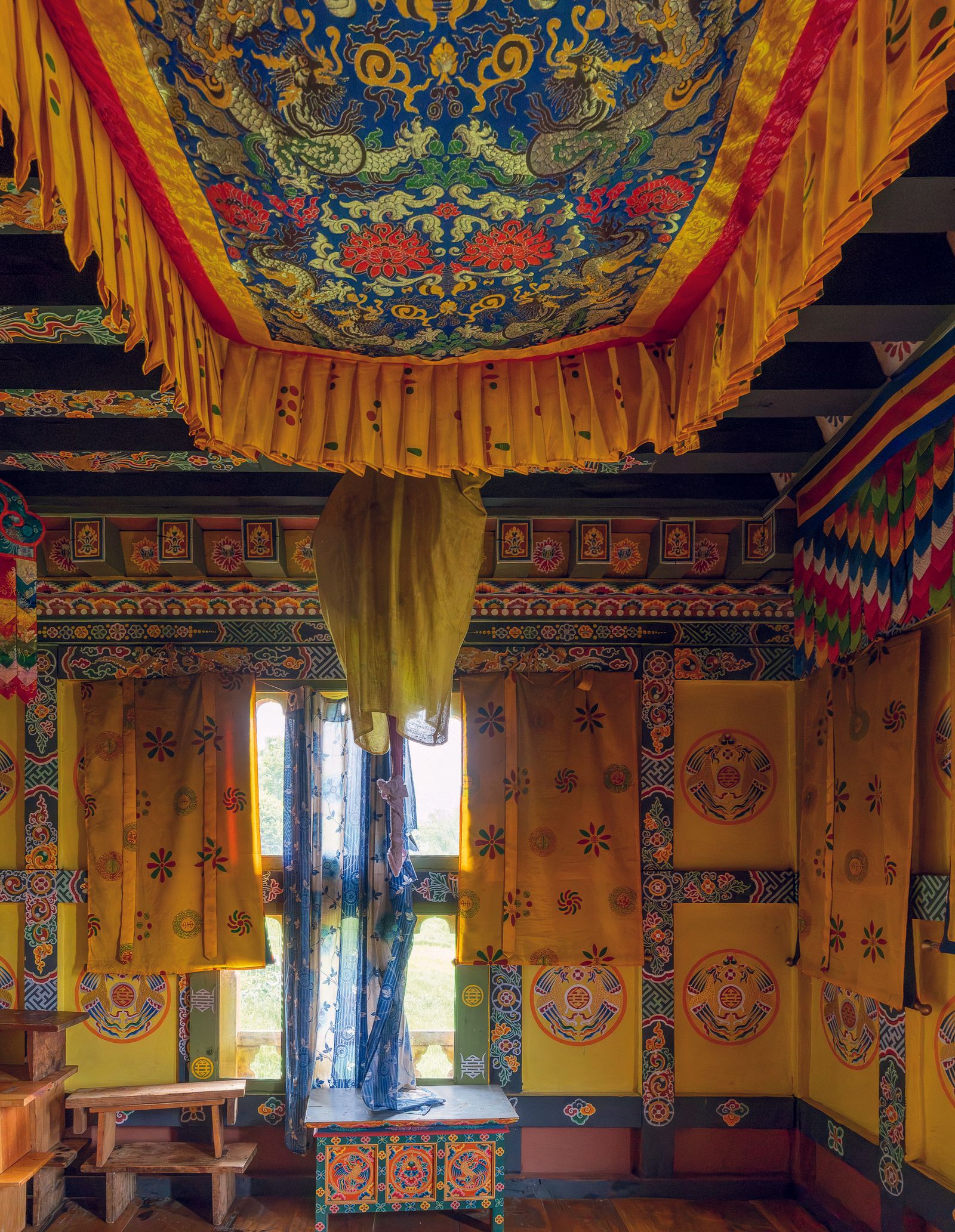
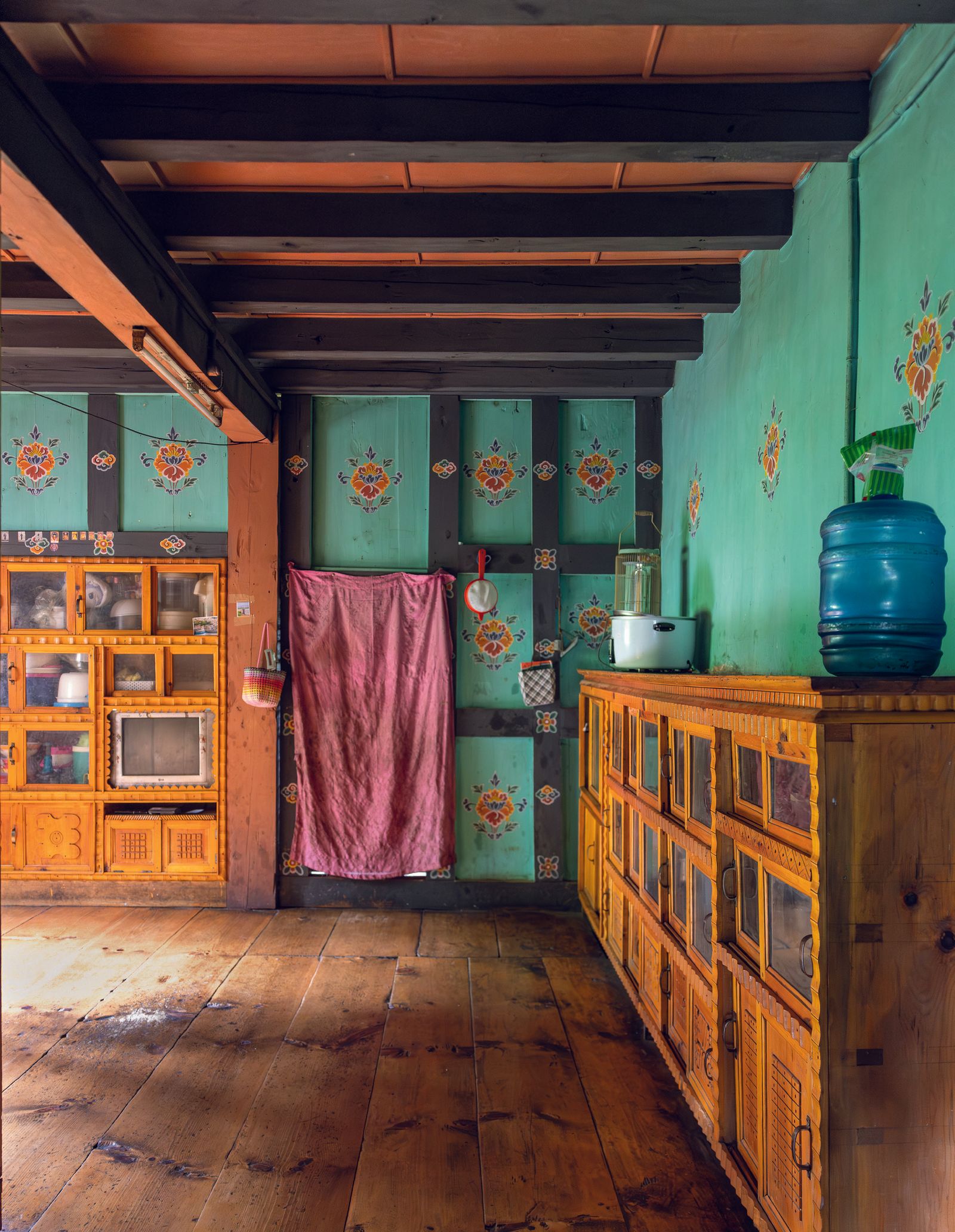
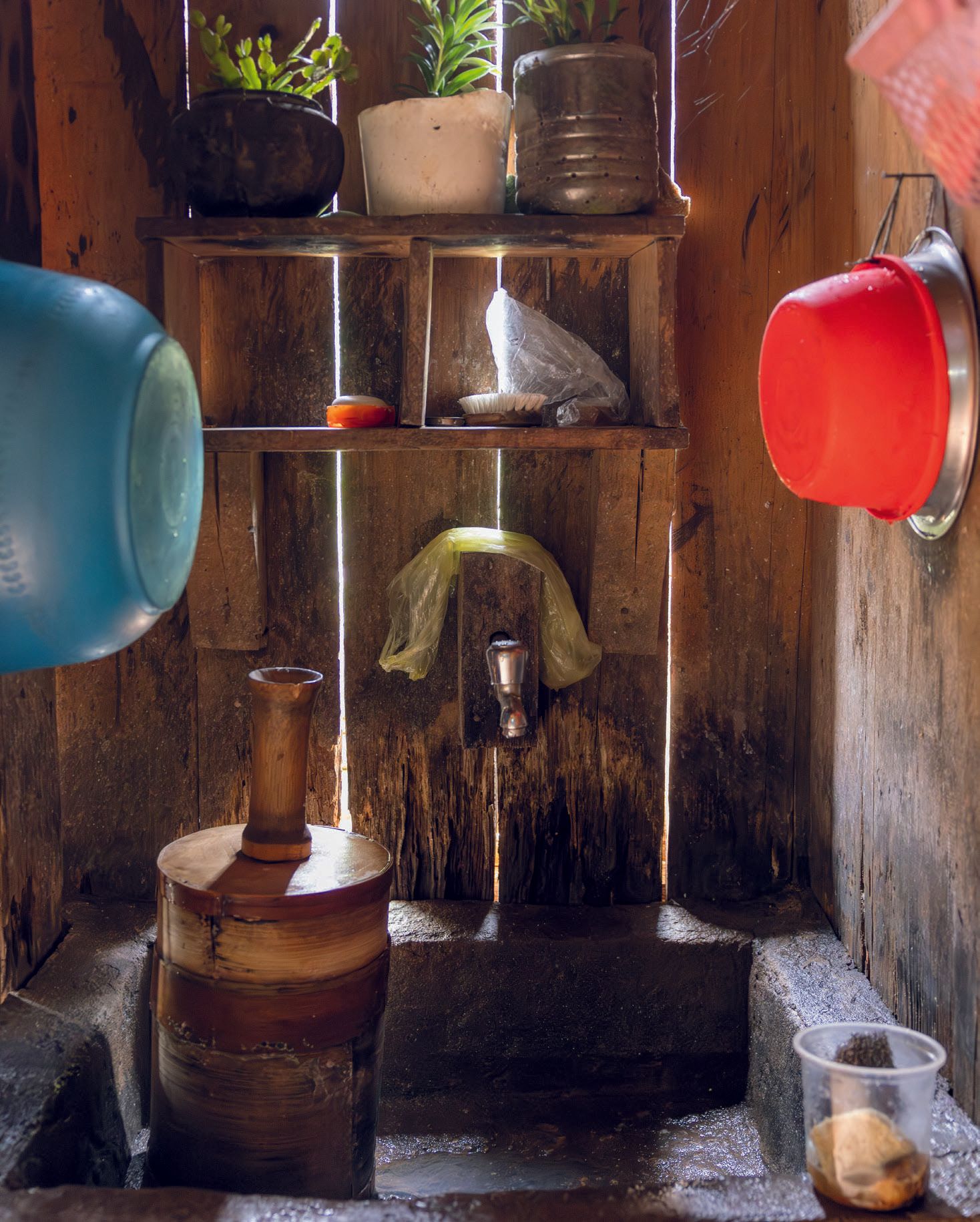
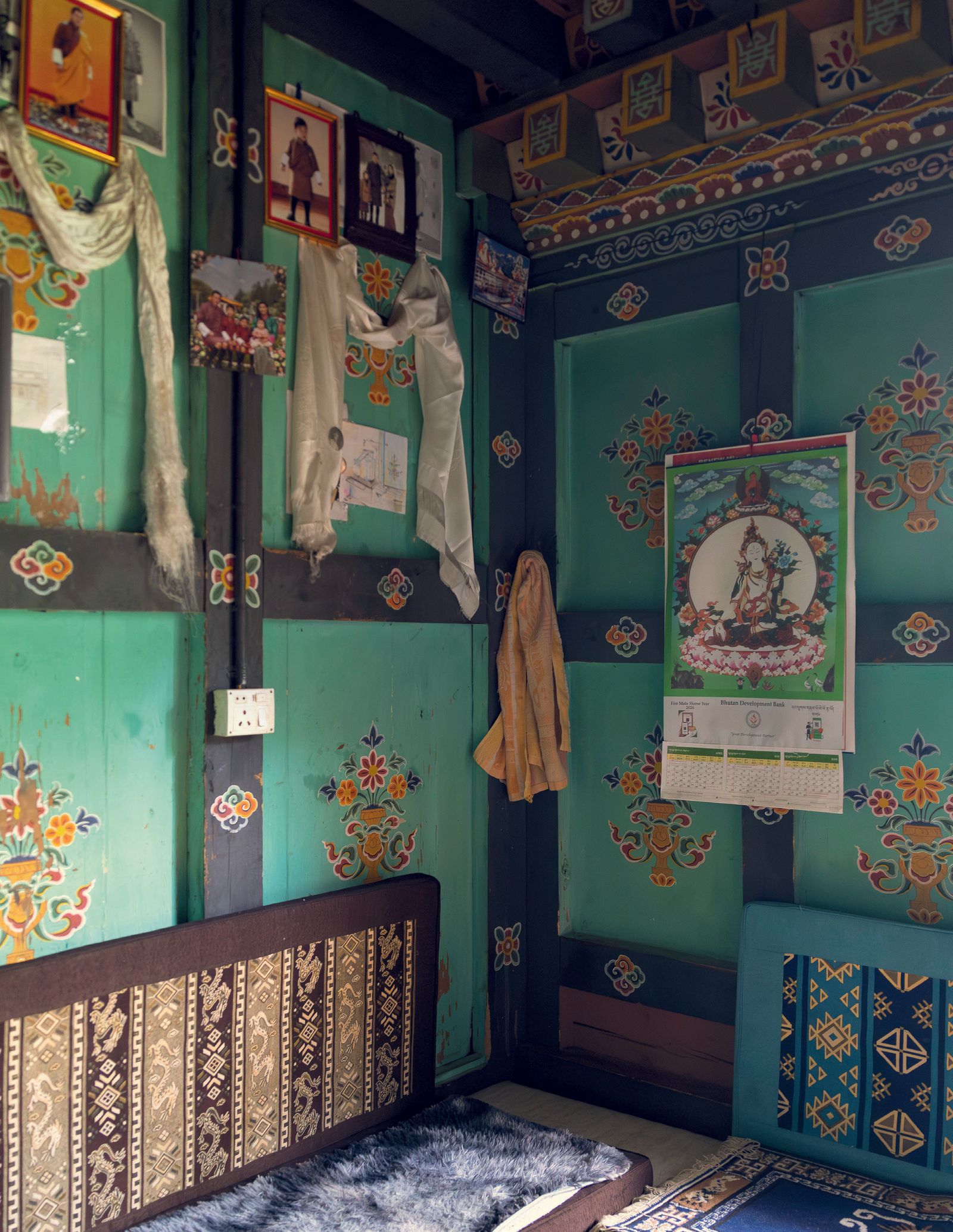
The couple poured their scant savings into renovations, adding two indoor bathrooms, so guests wouldn't have to use the outhouse, swapping wooden roof shingles for durable galvanised-iron sheets and updating the drab walls with vibrant hues. Tandi enlisted his friend, a lhadrip, or traditional master painter, to supply the final flourishes that transformed the exhausted farmhouse into a variegated abode, one ready to meet new times and people and add colour to their lives. All of the artwork you see on these pages was created freehand. The iconographic motifs on the outer walls depict the auspicious Tak-Seng-Chung-Druk, a tiger, snow lion, garuda (a mythical bird-like creature) and dragon that act as guardians of the cardinal directions and ward off evil. Inside, the hemlock floors, basic layout and furnishings remained as they were pre-facelift.
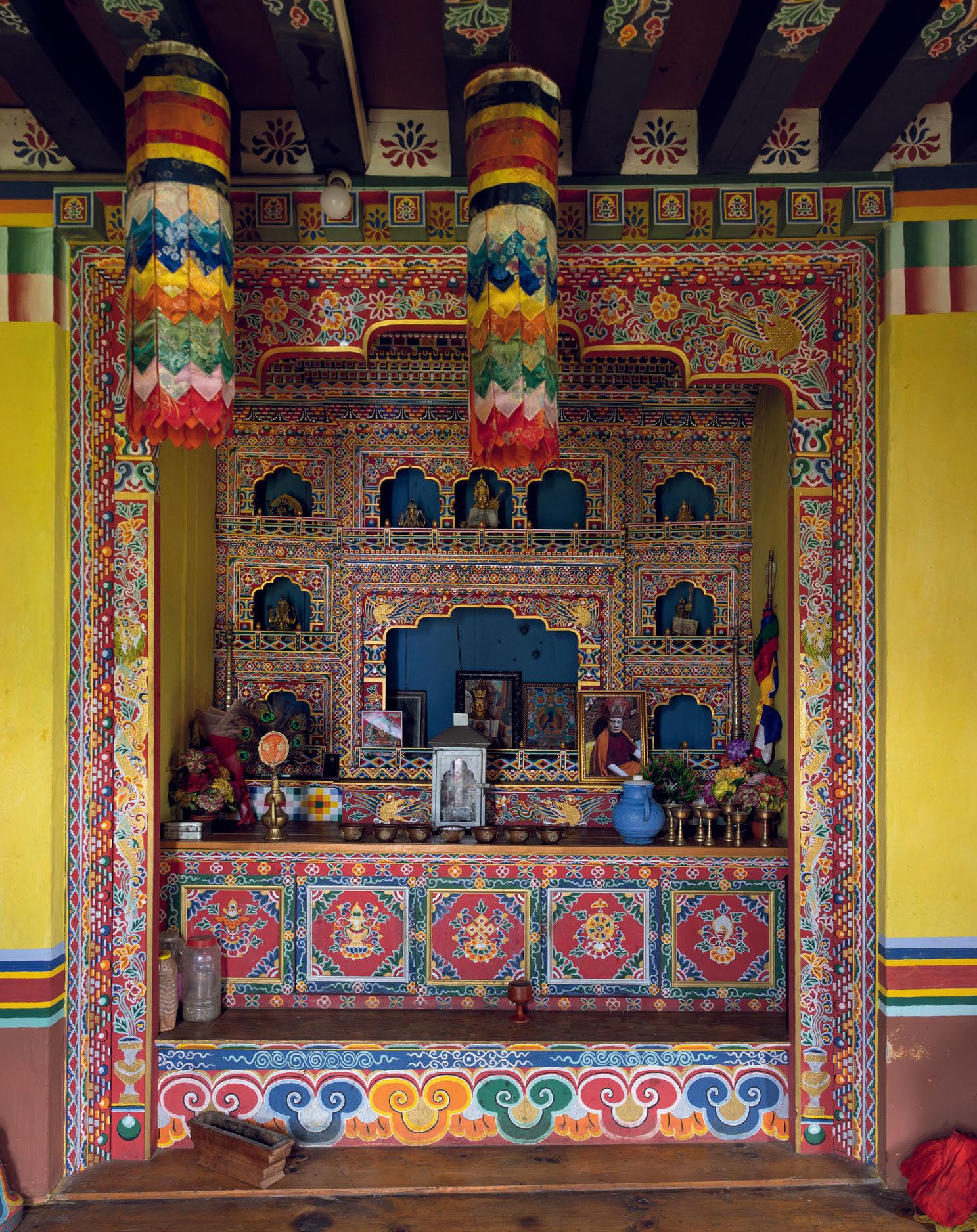
‘It is the colours and artwork that have brought the house alive in a way that even electricity couldn't,’ says Tandi. Lotuses, jewels, phoenixes and cloud motifs cover the interior walls. Since the country's citizens are chiefly followers of Mahayana Buddhism, which subscribes to the esoteric Vajrayana tantric practices for achieving enlightenment, religious symbols and iconography in traditional homes tend to be vivacious and dynamic, making up for their material minimalism. This house, too, has hardly any furniture, save for the cabinets used to store utensils. The couple still eat and sleep on the floor, sometimes around the bukhari, or stove, as generations have done before them. The centrepiece is the family shrine room, a must in all Bhutanese homes. Local carpenters crafted its chromatic altar and a canopy of brocade and faux-silk drapes the ceiling and walls, setting apart this sacred space. Daily offerings of water, butter lamps and incense are made to the deities that sit serenely in tiny niches.
Household items chart the transition microcosmically from a self-sufficient rural and agrarian society to a modern one reliant on imports. Everything is from India or China – rice cookers, water boilers, cylinders; melamine cups, plates and ladles; electric heaters, plastic toys, polyester cushions, curtains. In the days before the renovation, the family cooked at an earthen kiln, now swapped for a gas stove.
Through the window, one can see a tiny, nondescript three-tiered clay stupa erected before a single stone was laid down for the main house. This is the home of the lu – the spirits of the land. In local Bön traditions, a faith pre-dating Buddhism, people sought permission to share their space with the subterranean custodians of rivers, trees, lakes and mountains. Honouring them brings wellbeing and safety for dwellers, while defiling their environment leads to sickness, suffering and natural calamities. Like many Bhutanese people, Phub and Tandi consider themselves temporary stewards of this land because they know that one day they will be gone, as will those who come after, but it is the lu that will protect this area in perpetuity.
For more information about Mani Thangka email info@bhutanhomestay.com or visit bhutanhomestay.com bhutan.travel
A version of this article also appears in the October 2026 issue of The World of Interiors. Learn about our subscription offers
Sign up for our weekly newsletter, and be the first to receive archive culture stories like this one, direct to your inbox