


If Postmodernism can be defined as a movement that recycles ideas, styles and elements of discarded culture to create something new, then Rome, with its fragmented historical narratives, its contradictions and the exciting collision between its Classical past and chaotic modernity, is a quintessentially Postmodern place. It’s hardly surprising, then, that Milanese filmmaker Nicolò Bassetti, whose childhood was shaped by the movement’s theories, and his wife, curator and producer Gaia Morrione, chose the Eternal City as the setting for their family home.
An imposing gateway at one end of a leafy (and unusually quiet for Rome) square opens on to an alleyway leading up to a plump three-storey villa. Built in 1930, the building – which for years was home to Leo Tolstoy’s daughter Tatiana, as well as the poet Giuseppe Ungaretti – evokes the theatrical flamboyance of 18th-century barocchetto romano. Once inside, one only has to climb to the top of the grandiose marble staircase (or else take the old-fashioned elevator) and ring the doorbell to be whisked into a contemporary revisitation of a 1970s apartment in Milan. Specifically, the one in which Nicolò Bassetti, scion of a dynasty that shaped that city’s industrial, textile and political history, grew up.
Both his parents, entrepreneur and progressive publisher Aldo Bassetti and garden designer Laura Peroni, were prominent members of the enlightened cultural elite that turned postwar Milan into an experimental arena for radical ideas. ‘I will never forget the heated conversations over supper on the civic role of architecture, design and urban planning.’
A major shareholder in a media company that promoted new forms of expression across the arts, Aldo Bassetti was in contact with many important avant-gardists. ‘Ettore Sottsass and Marco Zanuso were close family friends,’ Nicolò explains. Admiration for those titans led the couple, who acquired this home three years ago, to ask the Shanghai-based architect Aldo Cibic, a longtime collaborator of Sottsass’s and one of the founders of Memphis, to join forces with them (along with the help of Studio Elia Giancotti, the Rome-based architectural duo he sometimes works with) on the total overhaul of their home. ‘The space was so cramped it felt like a beehive,’ Gaia recalls. Redundant partitions and the suspended ceiling were swiftly torn down, revealing the apartment’s handsome bones.
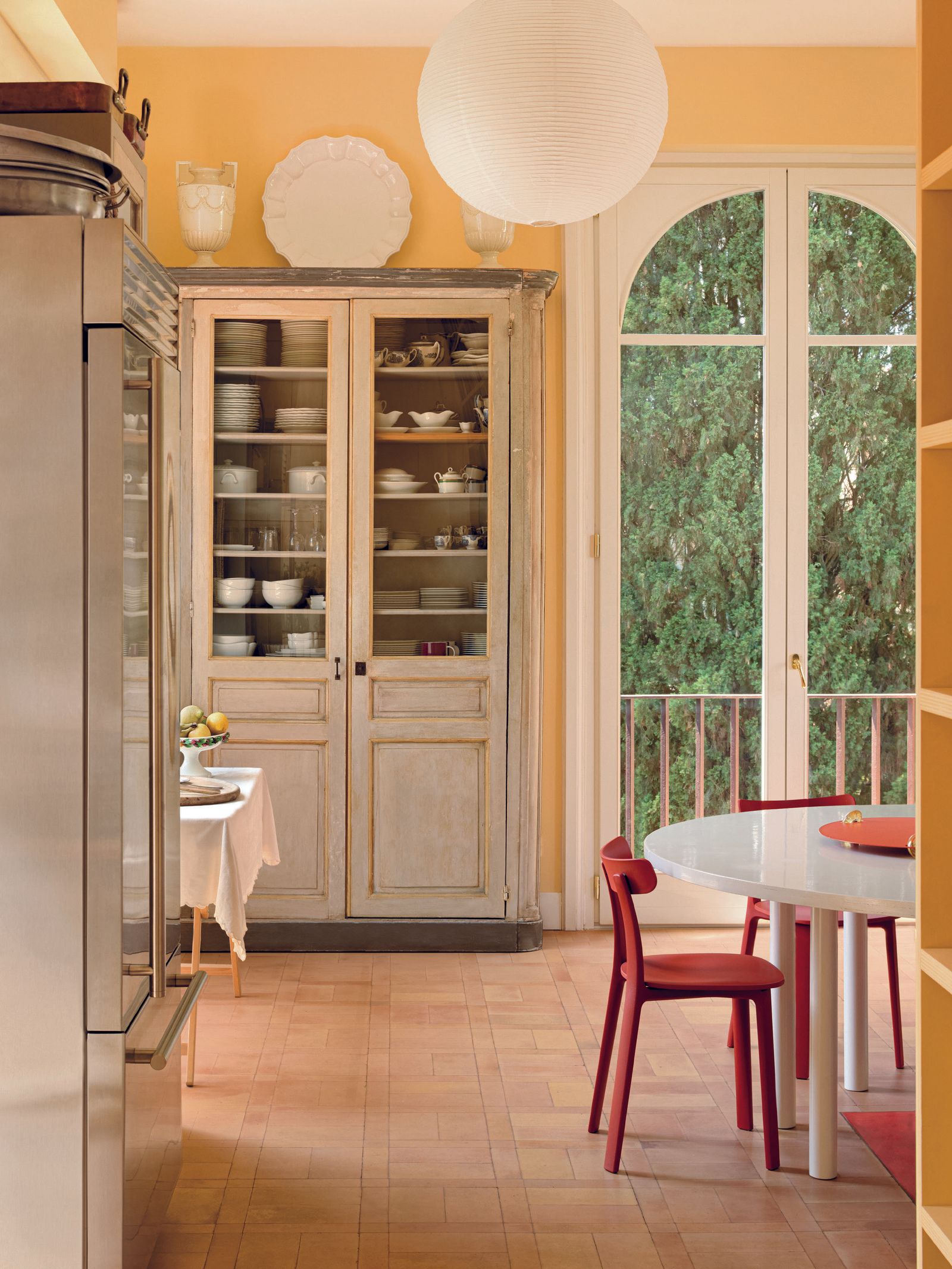
‘Four trucks were ordered just to carry out the rubble,’ she adds. The influence of Zanuso-inspired Modernism is seen in subtraction. No curtains can be found here, no corridors and hardly any doors – except for the ones leading to the home owners’ private rooms: the two studios upstairs and the sleeping quarters below. There are no rugs. Unencumbered, the original 1930 cotto tile floors in the living area highlight the sweeping, interconnected space that runs all the way from the kitchen to the sitting room at the other end and beyond, on to the terraces that embrace the entire perimeter.
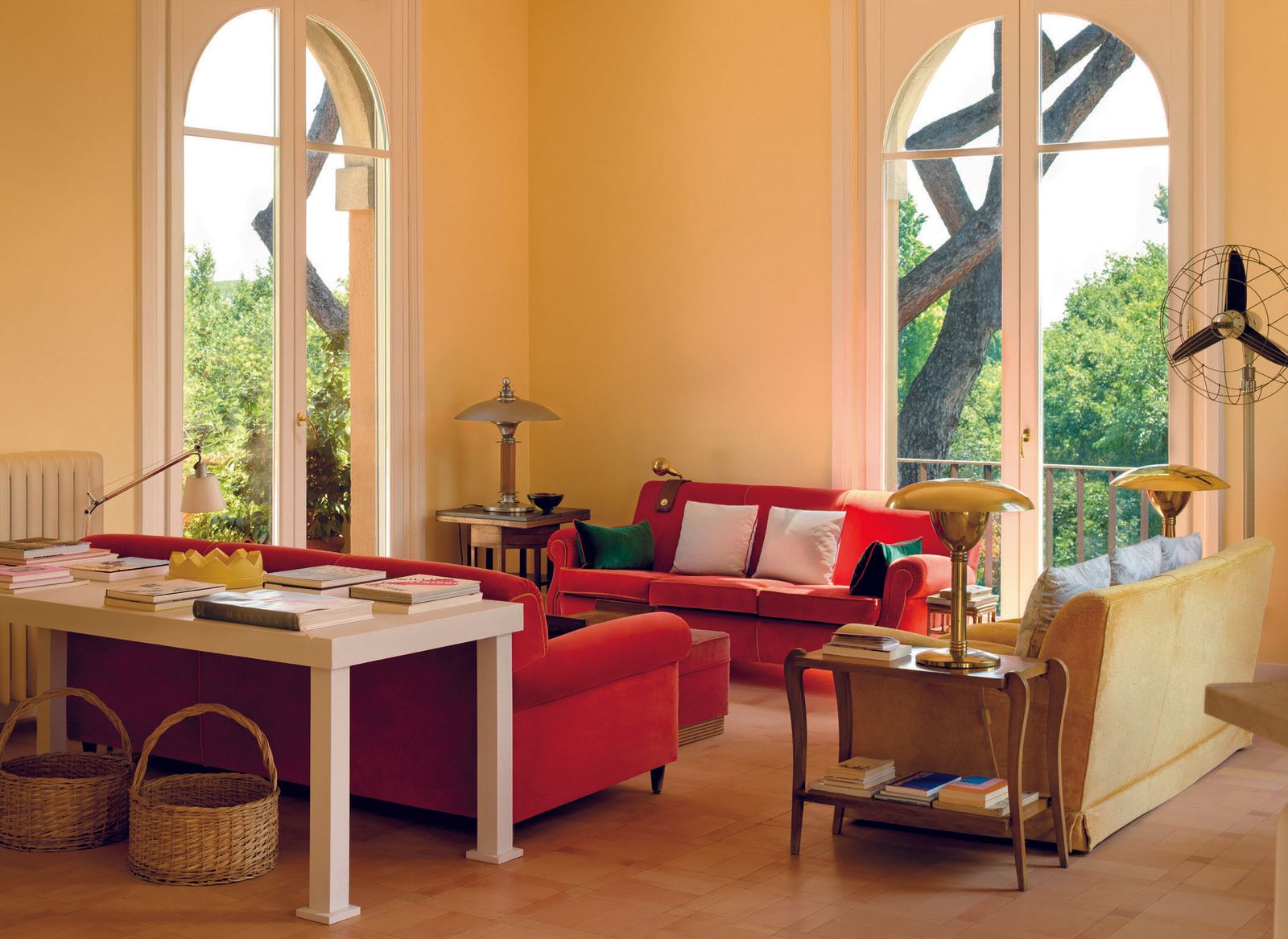
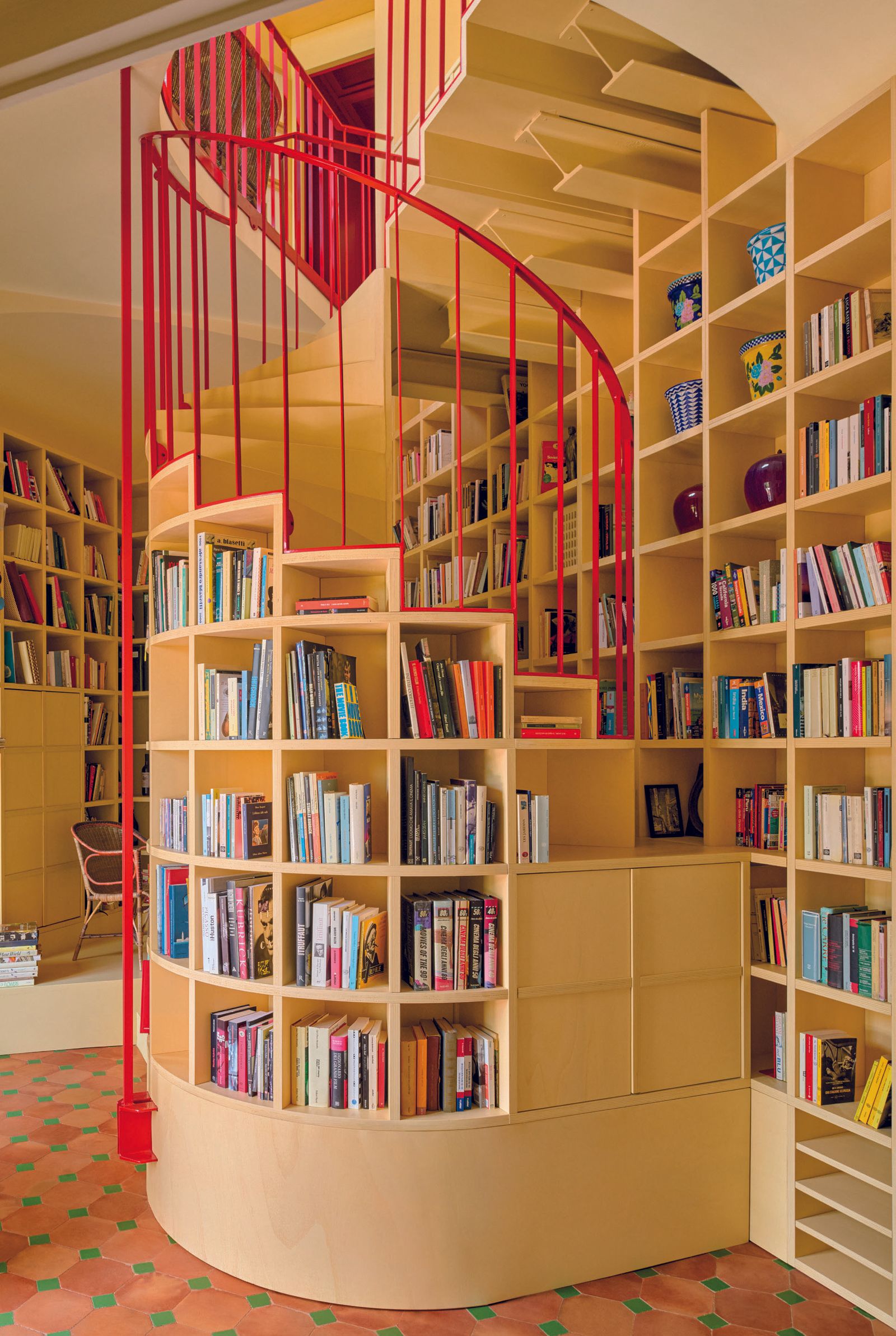
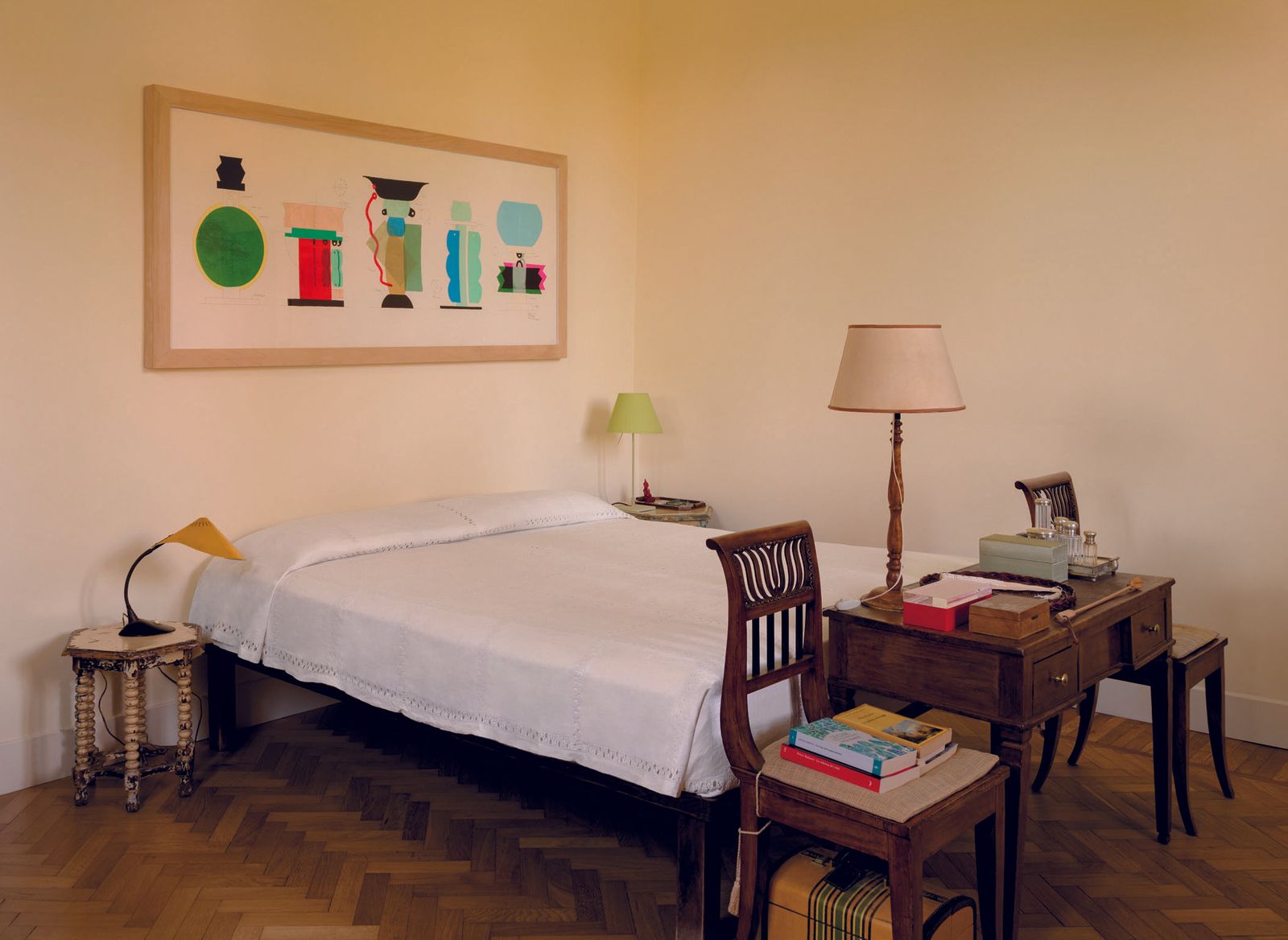
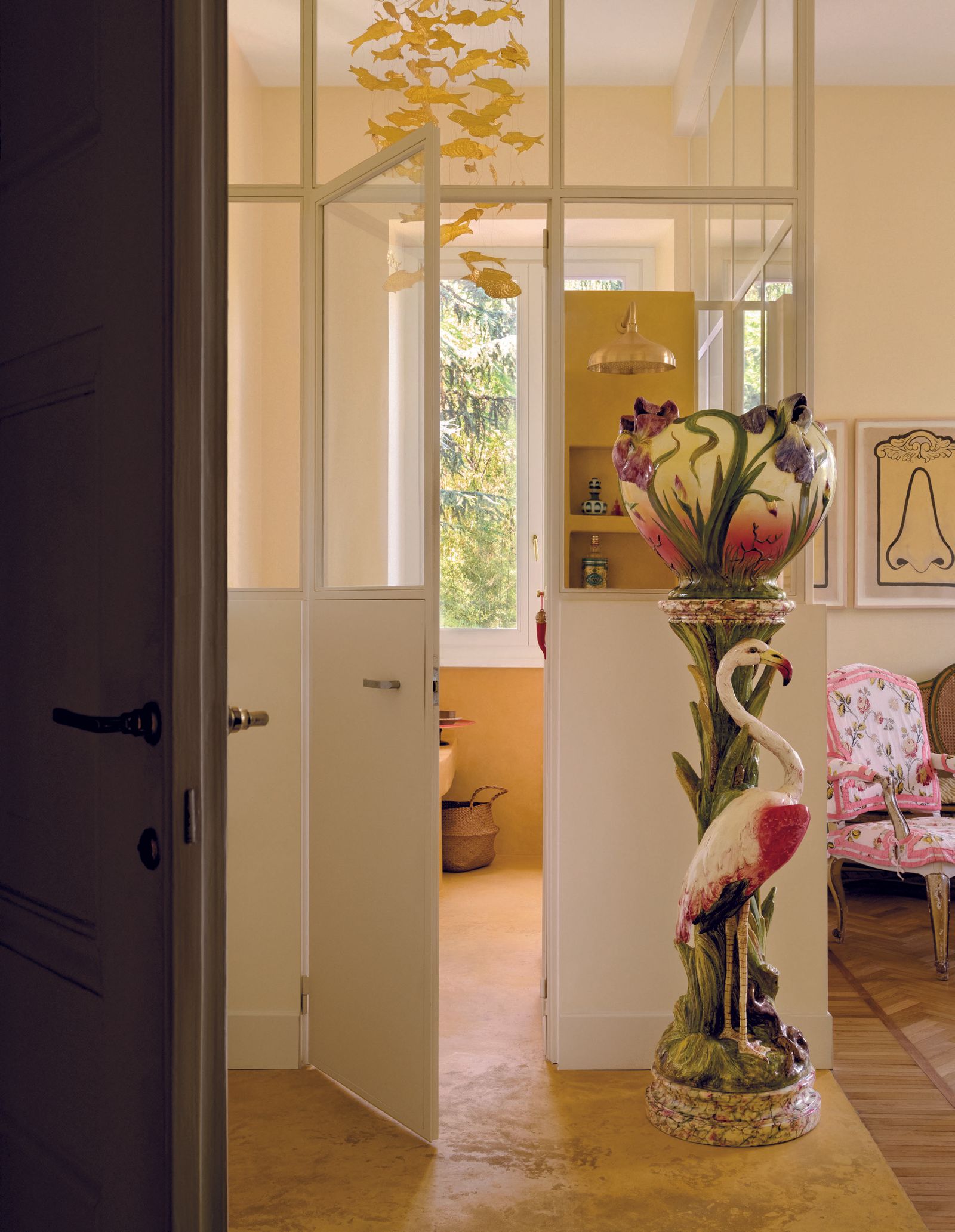
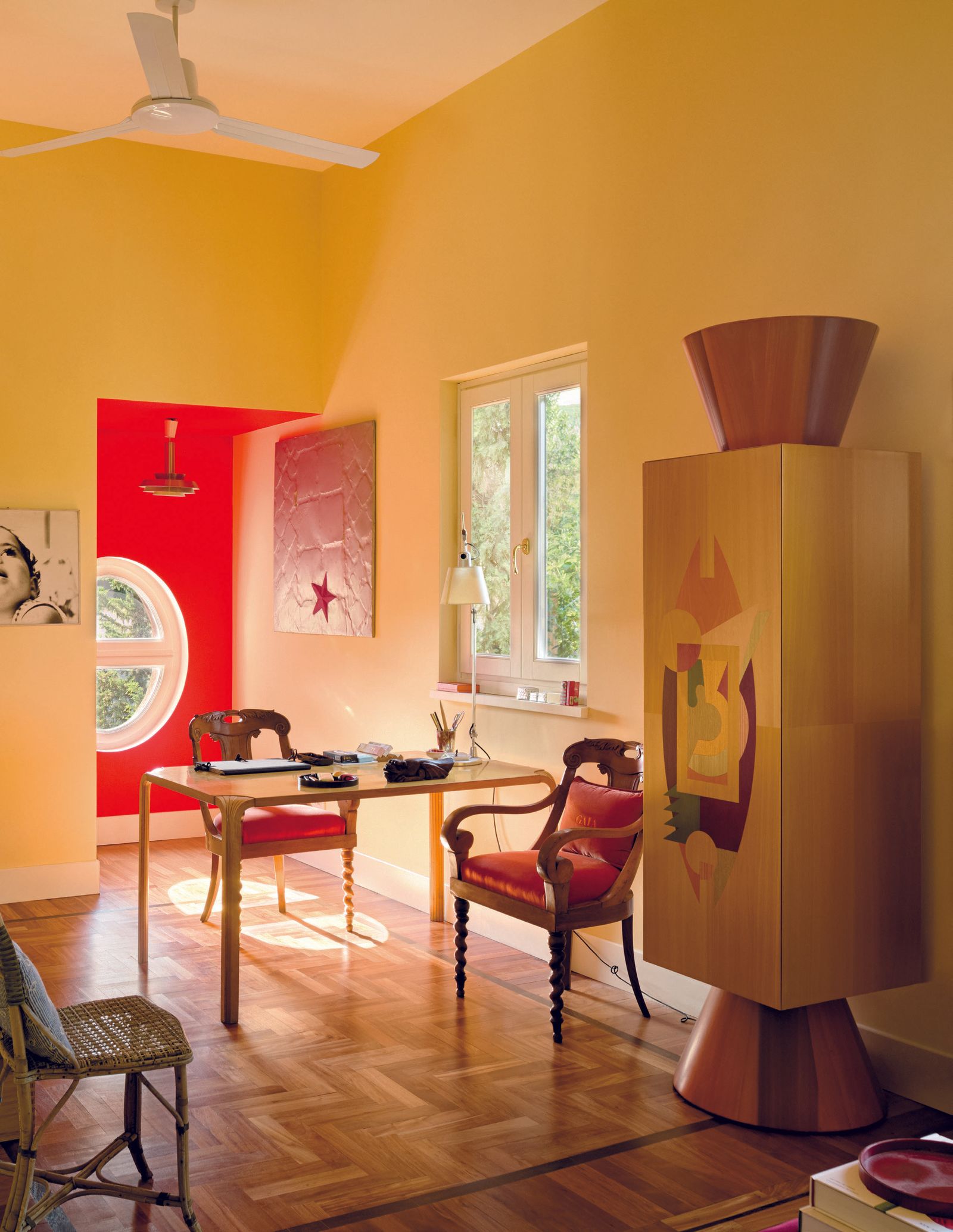
The influence of Postmodernism, and of the Memphis group in particular, is most apparent in the colour scheme. Sottsass’s declaration ‘You don’t save your soul just painting everything white’, which disparaged the ascetic limitations of minimalism in favour of a more generous, emotional approach to decoration, was taken quite literally by Gaia and Nicolò. They painted the rooms a bright warm yellow, reserving the brilliant, shiny red varnish for the massive metal beams that hold the place together, the staircase banisters and one of the bathrooms.
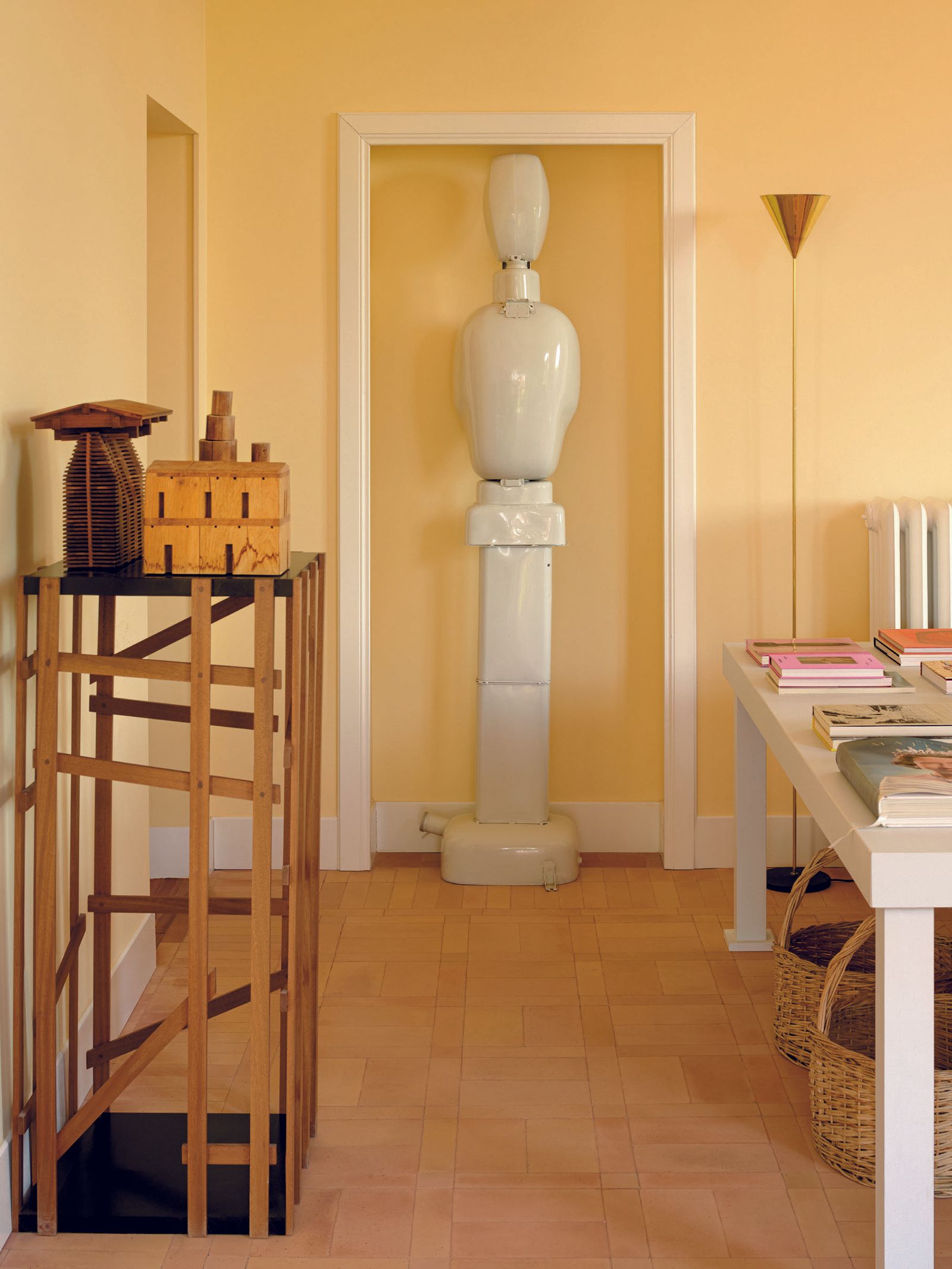
Giving free rein to memories and affections, as Gaia and Nicolò have done through the carefully edited selection of objects and furniture, is another bedrock principle of Postmodernism. Much-loved family heirlooms, like the mustard-coloured sofas that belonged to Aldo Bassetti, co-exist with artworks that bear a particular emotional resonance. ‘Take that sculpture,’ says Nicolò, pointing to a two-metre assemblage of Moto Guzzi motors, sprayed white, that form an upright humanoid torso. The artist Ugo Guarino, Nicolò’s teacher in middle school, was an activist who devoted his life, and his art, to shaping public opinion about the then pitiful state of psychiatric wards in Italy. ‘He might be forgotten as an artist, but his sculpture, and his legacy, are an important part of our life.’
That said, this home, shaped as it is by its inhabitants’ numerous interests, is anything but a nostalgic timewarp. Take their shared passion for reading, represented by numerous bookshelves, including one that wraps itself around the spiral staircase. Ingeniously conceived, yet elegantly essential, it is clearly inspired by architect Gae Aulenti (another family friend who previously designed a home for Nicolò’s mother). Her lamp designs feature prominently in this flat too.
Blending two separate elements, the metal staircase and the wooden library (which hides storage) pay tribute to Aulenti’s habit of transforming everyday elements into sculptural objects. Similarly, when Gaia is not producing, she curates events focused on sensory experience, particularly smell, developed under the brand Art of the Senses. Indeed, the four shell-shaped terraces immersed in the resin-scented shade of a dozen or so umbrella pines double up as her very own laboratory of botanical essences.
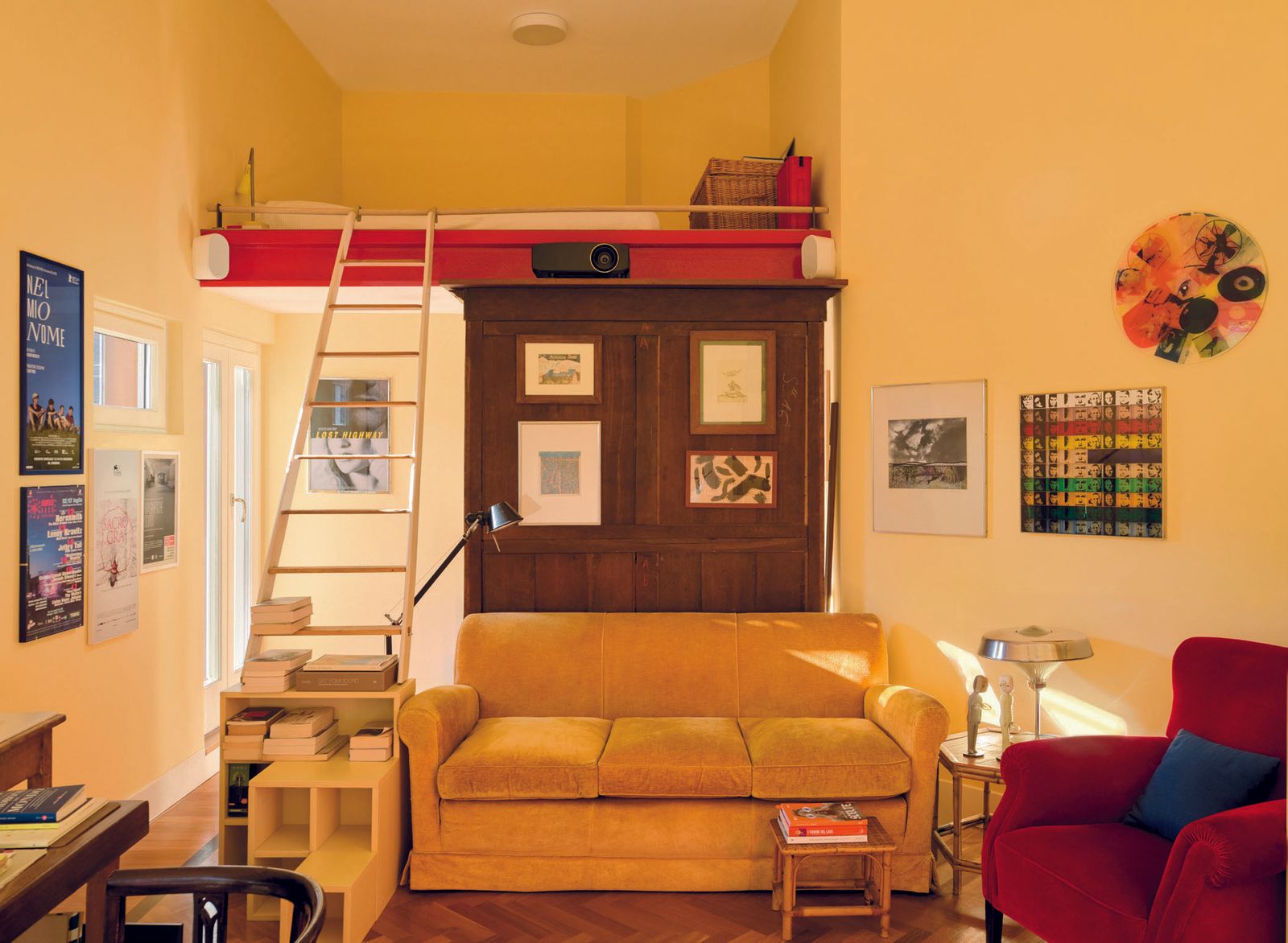
Entire shelves devoted to solo travel writing, from Patrick Leigh Fermor and Norman Lewis to Iain Sinclair, the author of London Orbital, testify to another deep-seated passion. In 2012 Nicolò, who describes himself as an urban explorer, embarked on an epic journey following Rome’s chaotic ring road on foot, with many digressions along the way; the full odyssey totalled 300 kilometres. ‘It took three months, walking several hours each day.’ His mission was to see and understand those areas on the outskirts of the city that have fallen into a state of decay. His memoir about the experience was the original idea for Sacro GRA, a documentary directed by Gianfranco Rosi that in 2013 won the Golden Lion at Venice’s 70th international film festival. Others directed by Bassetti and produced by Morrione followed suit. These included Into My Name, concerning a group of young transgender men, which was co-produced by Academy Award nominee Elliot Page and wound up being selected at the 2022 Berlinale International Film Festival. Its success led to the couple founding Nuovi Paesaggi Urbani, a production company focusing on documentaries, independent theatre and cultural projects that seek to bring attention to life on the margins.
To return to this apartment, and the couple that inhabits it, the generation of postwar Italian designers and intellectuals that Nicolò grew up around has clearly left a mark that goes well beyond aesthetic choices. To borrow Ettore Sottsass’s words, summing up his ethos in a nutshell: ‘For me, design is a way of discussing life. It’s a way of discussing society, politics, eroticism, food... if you’re going to teach anything about design, you must first and foremost teach something about life’.
Nuovi Paesaggi Urbani. Visit npu.it
Aldo Cibic. Visit cibicworkshop.com
Studio Elia Giancotti. Visit eliaegiancotti.com
A version of this article appears in the October 2026 issue of ‘The World of Interiors’. Learn about our subscription offers. Sign up for our bi-weekly newsletter, and be the first to receive exclusive stories like this one, direct to your inbox





