

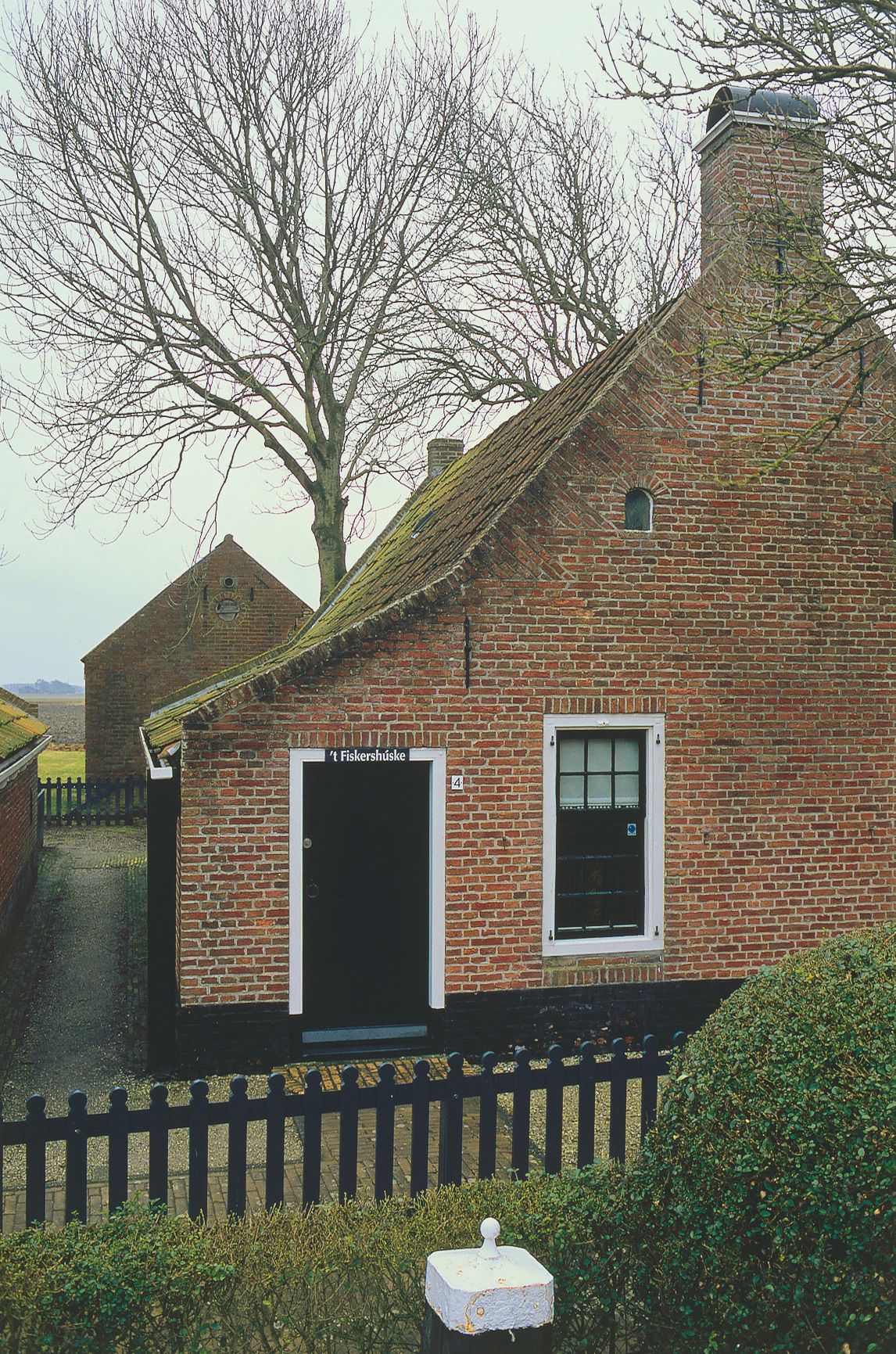
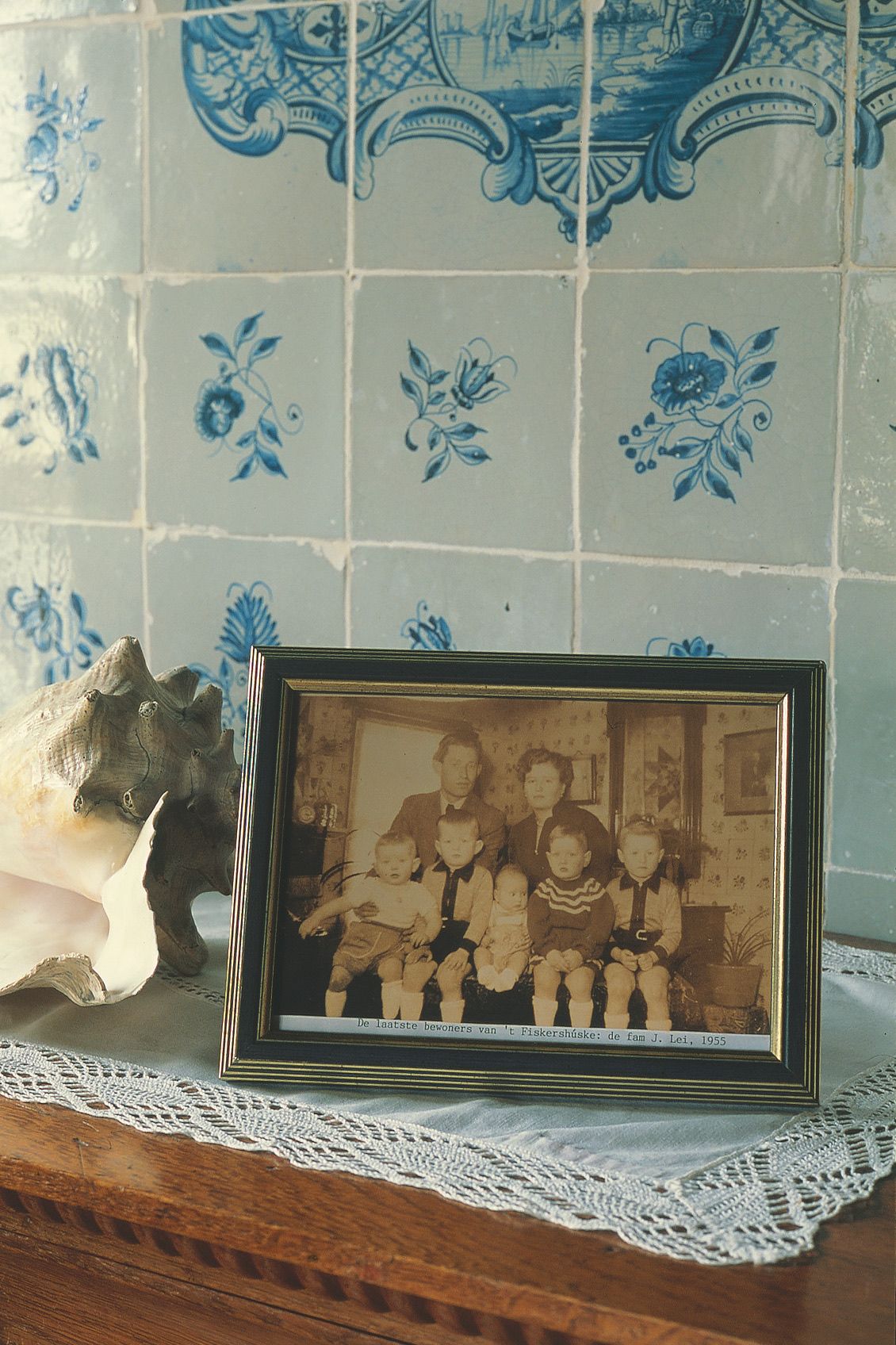
Moddergat is a small fishing village in Friesland, northern Netherlands, sheltered by a tall dyke. Some of its houses were converted into the Museum ‘t Fiskershúske in 1965; the one belonging to the Lei family was lived in as recently as 1963.
The fisherman in question, a Protestant, had married a girl from his community in the late 1940s. In this modest mid-19th-century home, the couple brought up 15 children. Money mainly came from shrimps caught in the shallow Wadden Sea using special boats. All around Moddergat were small workshops where the shrimps were dried and processed into a protein-rich powder.
In this inland stretch of water, calmer than the North Sea, men also fished for sole, plaice, mackerel, and anchovies. Herring, meanwhile, was in a league of its own. When this prized bounty from the sea eventually dried up, the effects were disastrous.
The women, children, and elderly members of the community foraged for shellfish on foot and collected bloodworms used to bait the hooks on nets. The women, taking them to market at Dokkum, around 12 km away, would have looked fine in their baggy trousers – into which they stuffed heavy skirts – all tucked into tall leather boots.
The men wore pullovers known as ganseys, adopted and adapted from the hardwearing sweaters of the Channel Islands. These sophisticated woollen garments, adorned with stitched motifs, were particularly favoured in Moddergat between 1850 and 1940, when more than a hundred designs proliferated. Each symbol had a meaning – a cable signified fidelity, lightning suggested the power of nature. There were nets too, as well as harpoons, flags, and waves. Each family had its own combination, passed down through generations. These characteristic designs could help identify a body lost at sea.
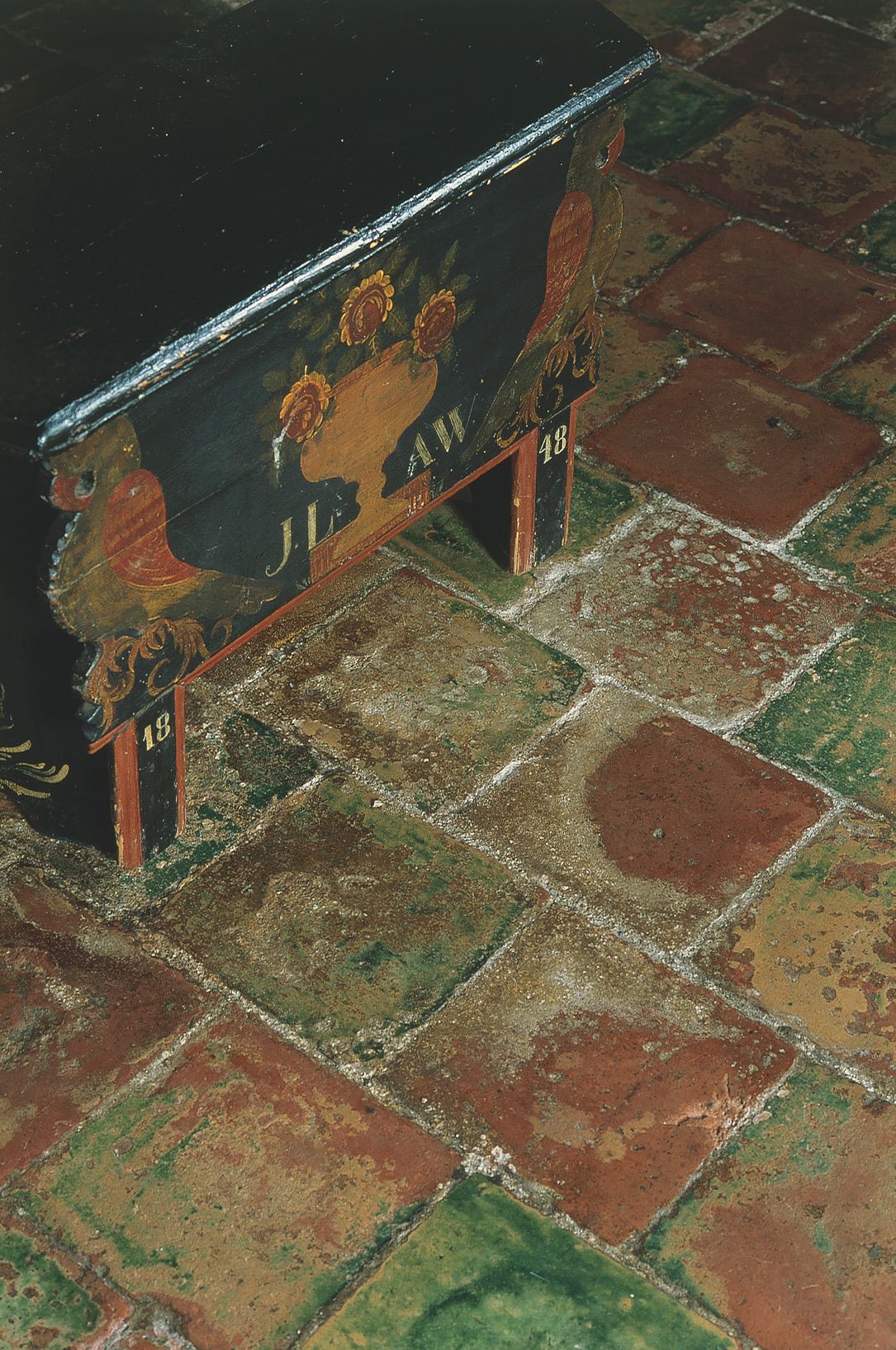
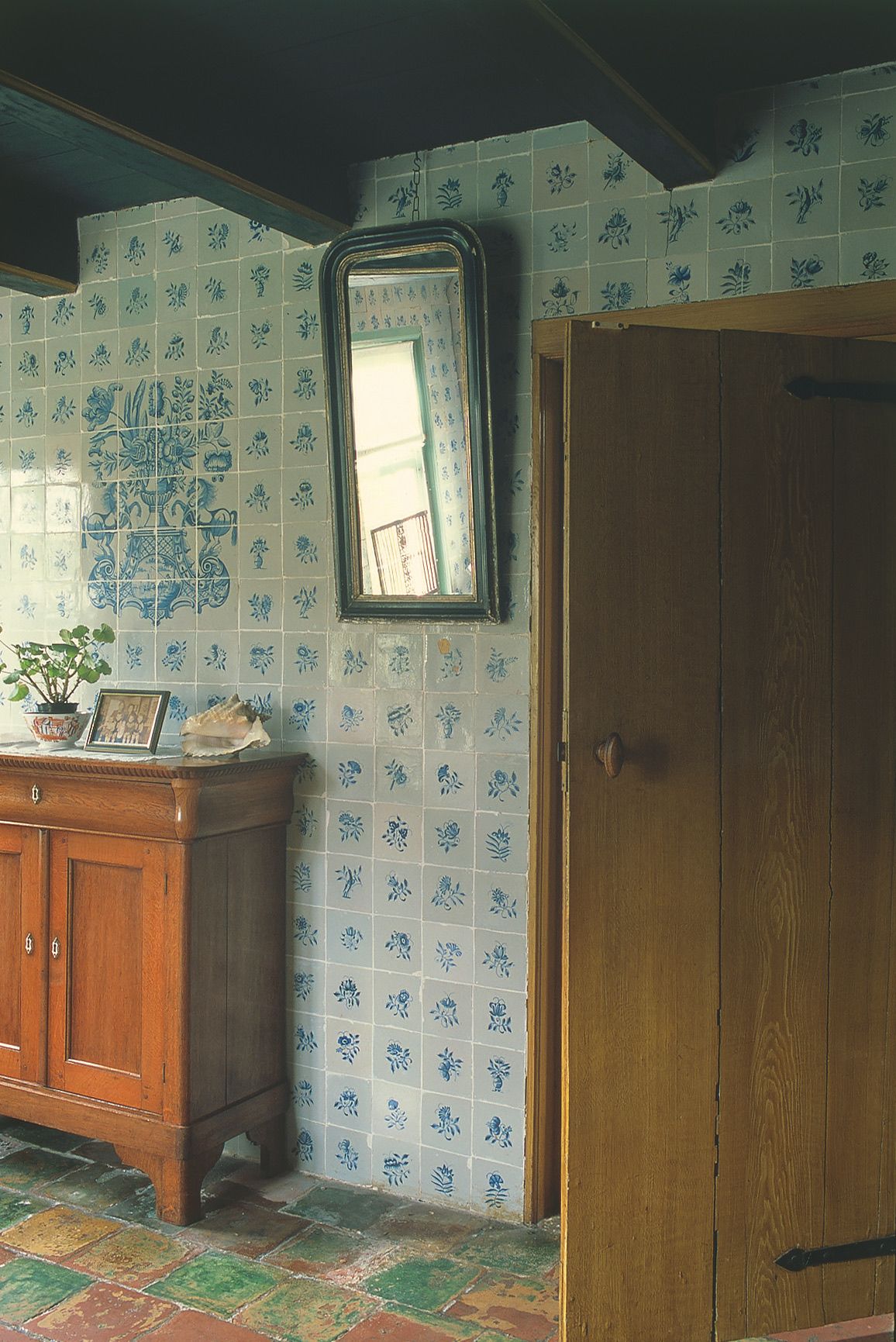
In each of the houses in the Moddergat museum, a corridor runs along the side, forming the entrance and leading to two rooms: the bedroom/living room and the kitchen/workshop. Three of the four walls in the relatively large living room are lined top to bottom with blue-and-white earthenware tiles. Made locally – like those underfoot – these are not Delft but Frisian tiles, notable for their painted meadow flowers, birds, and butterflies, occasionally interspersed with panels depicting bouquets, boats, or stars. In the big fireplace, the family would have warmed themselves beside a peat fire before cooking on the embers; quotidian fare was nearly always fish and potatoes.
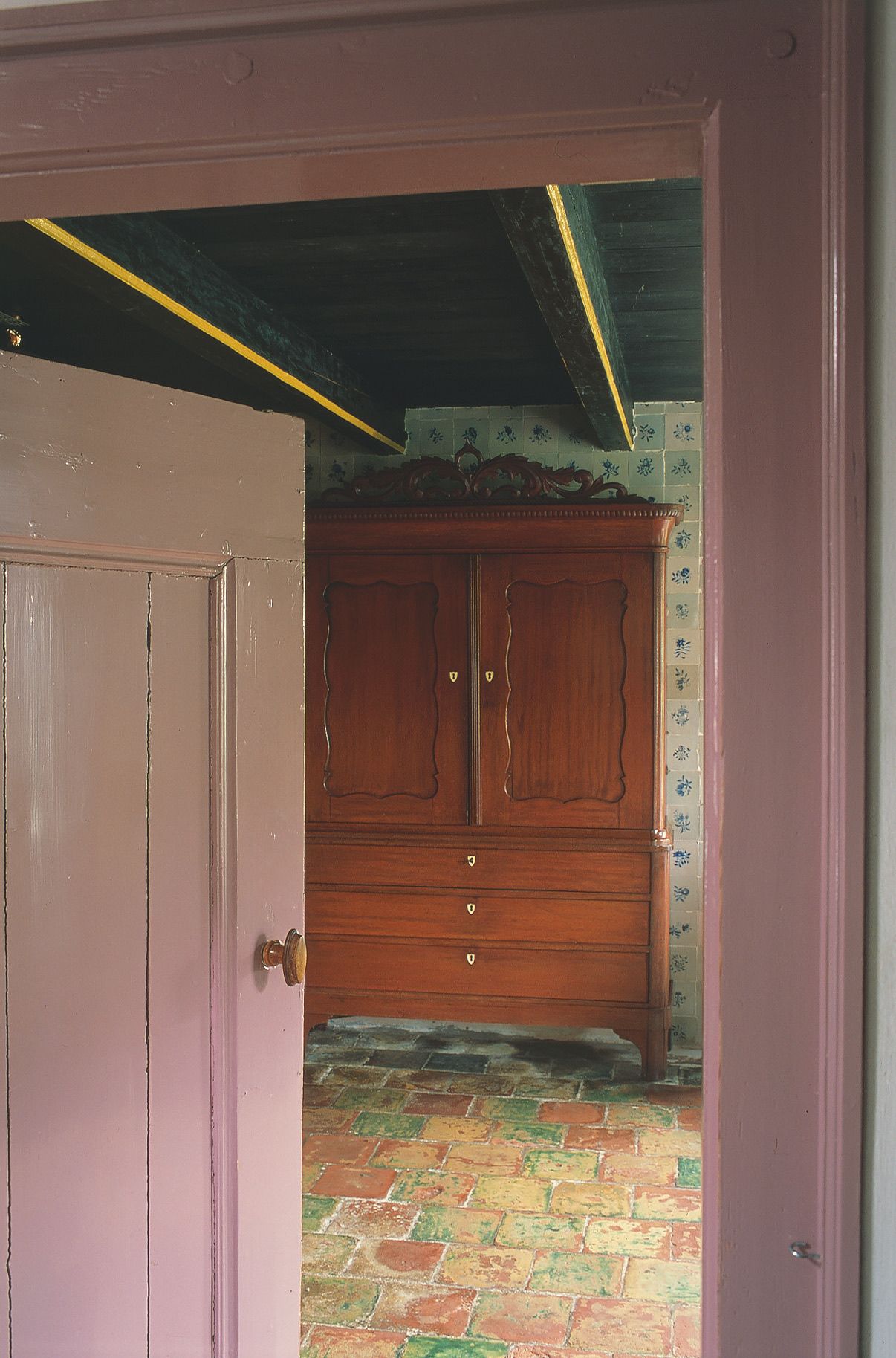
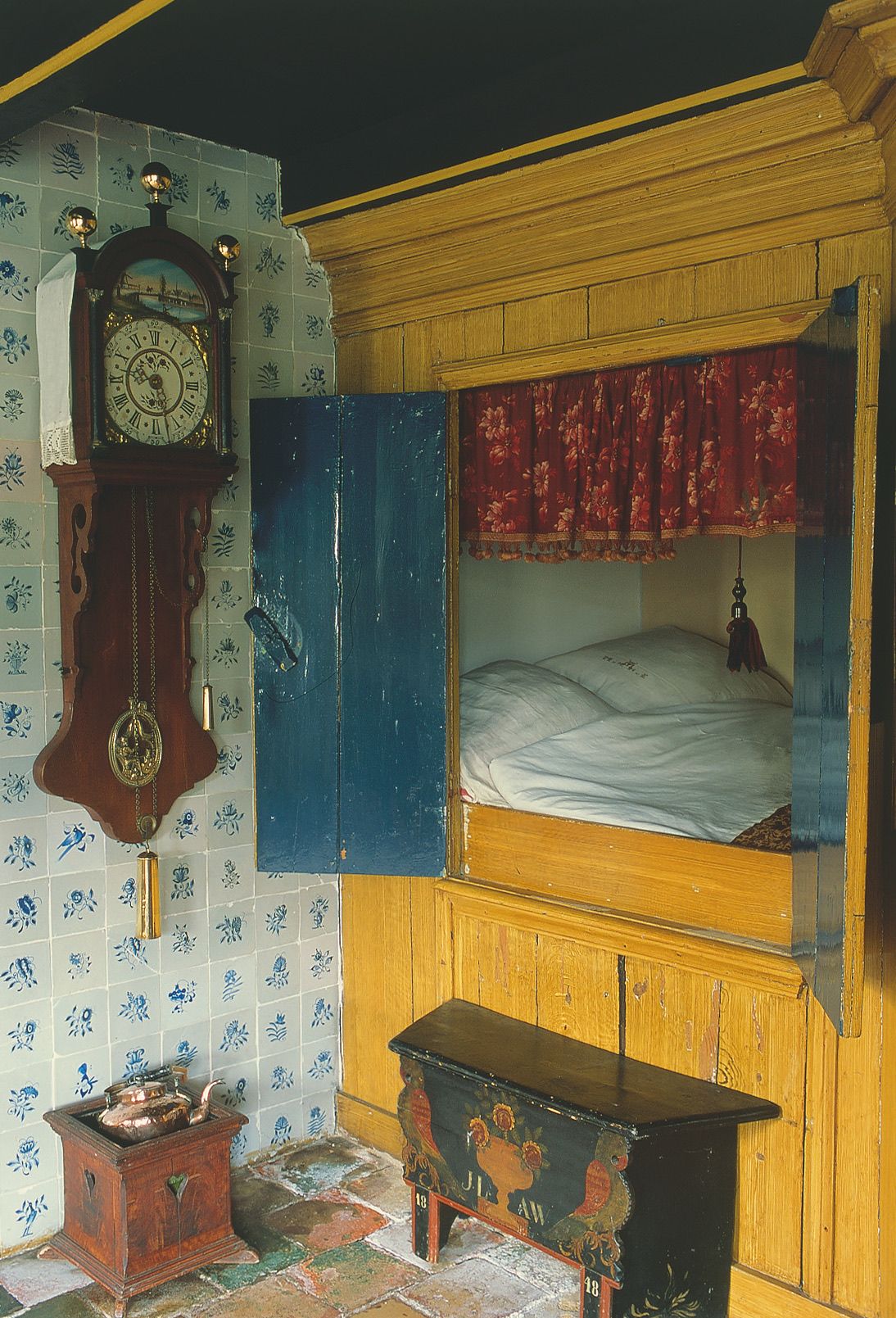
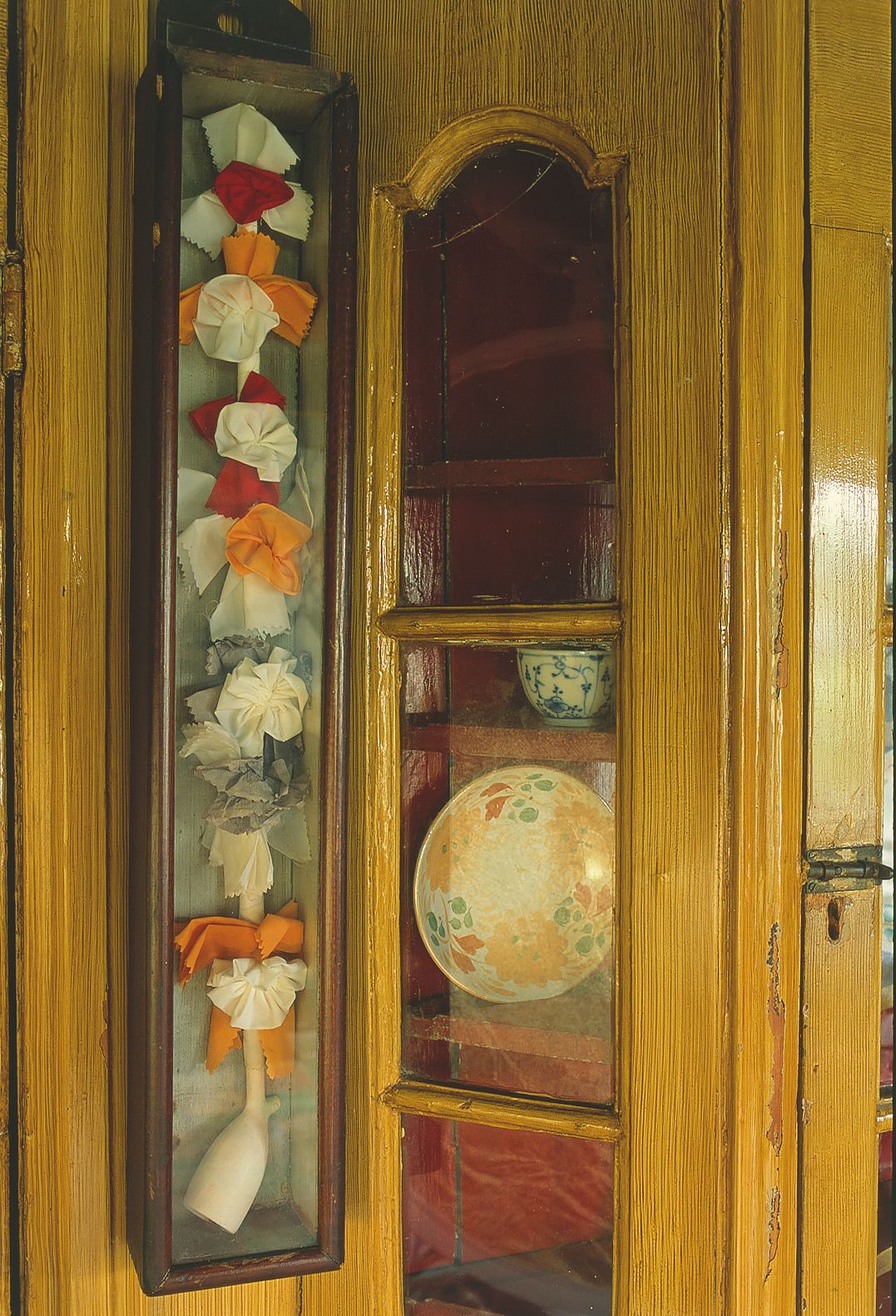
The fourth wall of the living room is filled by two box beds separated by a display cabinet. One was reserved for the younger family members – at least six children would have slept here, with babies’ cradles tucked at the foot of the bed beneath shelves and storage cupboards. The other was for the father – when he wasn’t out fishing for herring – and mother. Bedposts were painted with a golden-yellow faux-grain effect and lined with navy blue – not only a clever way to disguise blemishes, but also to hide the material itself, since a tax was levied on certain types of wood. The ceiling was black, adorned with a delicate reddish-yellow line, a visual pledge of allegiance to the princes of Orange. The central display cabinet, lined in blood red, contained mementoes – symbols of taste and culture. Often going beyond the perimeters of the Wadden Sea in search of herring, the fishermen would have encountered relatively exotic objects: golden-brown and blue Jersey pottery, fly catchers, decorated plates, small woven baskets, or Staffordshire dog figurines (which, it was whispered, were displayed in brothels. Depending on whether they were placed nose-to-nose or tail-to-tail, the client knew whether he could enter or not). Taking pride of place beside the cabinet would have been the pipe given by the bride-to-be to her future husband on their wedding day. It was thought to be lucky and had to be treated with the utmost care. Here too would be a Bible (if the family owned one), but never a crucifix, Virgin, or other votive offering of the kind you might find in the homes of Catholic fishermen in Spain, Italy, or France (WoI April 1985). Nearby, a monumental clock adorned with copper balls, protected by a piece of lace and decorated with a small landscape, is the star turn that marks out the family’s standing. The dial, set on a white background, suggests it was made before 1850.
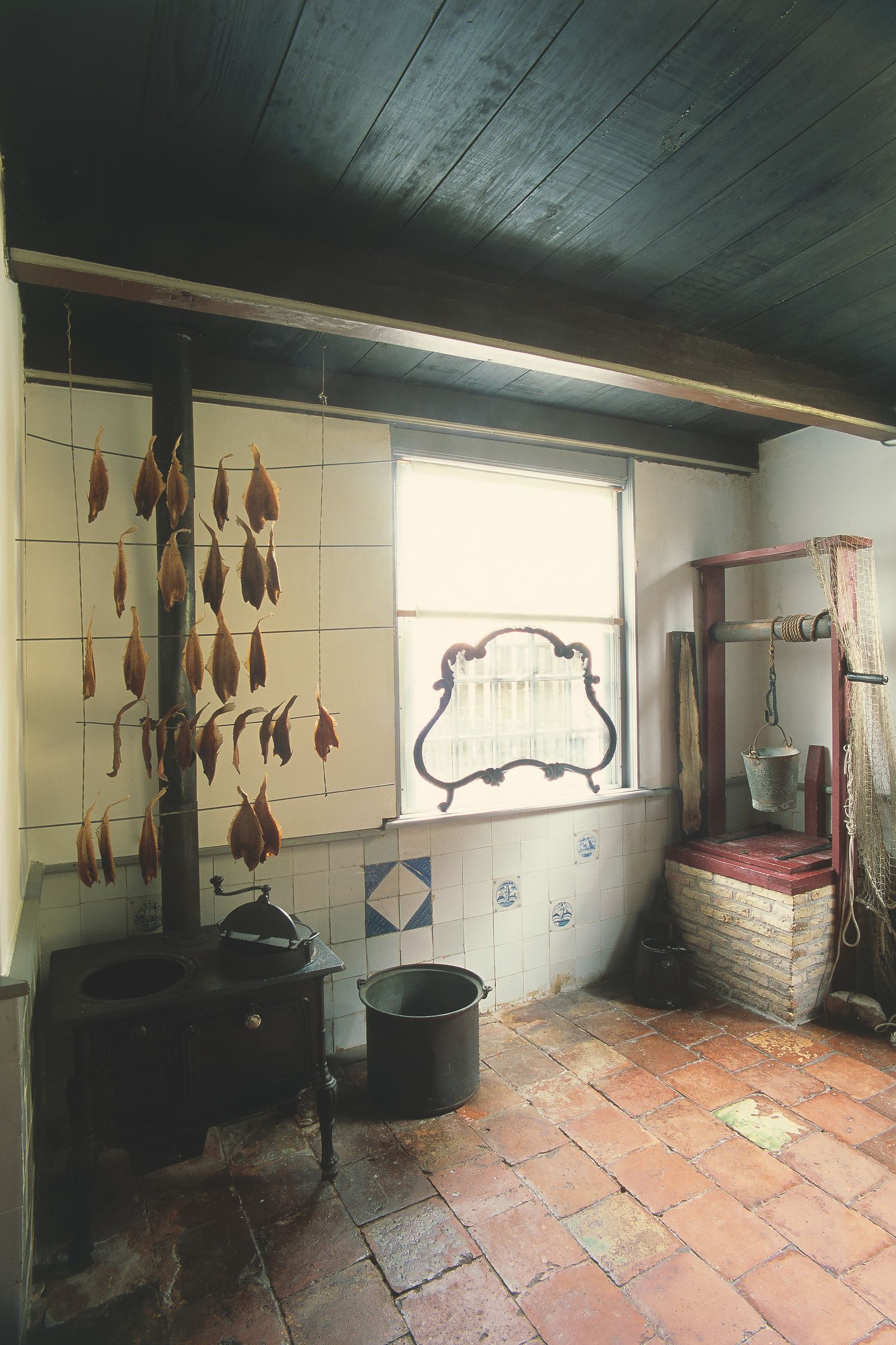
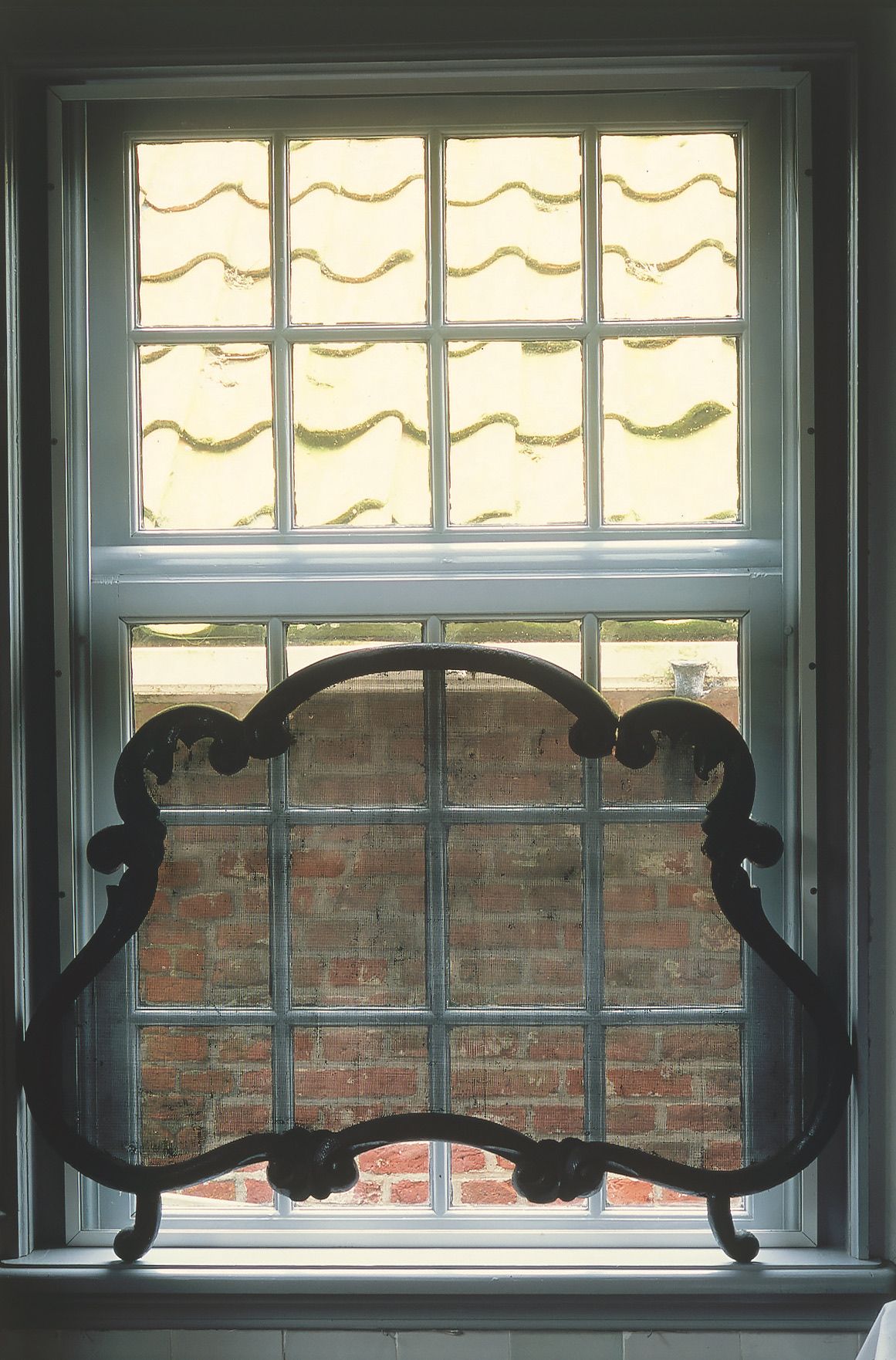
The back room, with its stove and internal well, is lined in (cheaper) plain white tiles, occasionally livened up by a geometric design or flower. This utilitarian space spared the family from having to go outside to draw water. It was here that they made and mended nets when the weather didn’t allow them to work outdoors. Here, too, they brought in fish after drying – an operation typically carried out in the wind (preferably an easterly) on large geometric wooden constructions on the dyke, where sheep now graze peacefully.
At the time, these houses would have felt minuscule, smoky, and damp – overcrowded, particularly during bad weather – thick with the stench of shrimp or herring, and filled with the noise of children. Nevertheless, like the home of the Frisian milkman-artist Ruurd Wiersma (WoI Nov 2016), they have the power to charm us today. Their gaiety and bold use of colour feel uplifting, from the bed’s golden-yellow chassis and olive-green floors to the blue-and-white walls, off which the northern light bounces.
Then there’s that soft hue of the entrance and doors – the peculiarly Dutch pink (WoI May 2017) used in cottages and castles, manor houses and old shops. The people of Moddergat believe it’s derived from brick powder mixed with chalk. The writer Sacheverell Sitwell, travelling through the Netherlands in the 1940s, called it ‘apple blossom.’
Details: Museum ‘t Fiskershúske, 4-8a Fiskerspaad, 9142 UN, Moddergat, Netherlands. museummoddergat.nl