



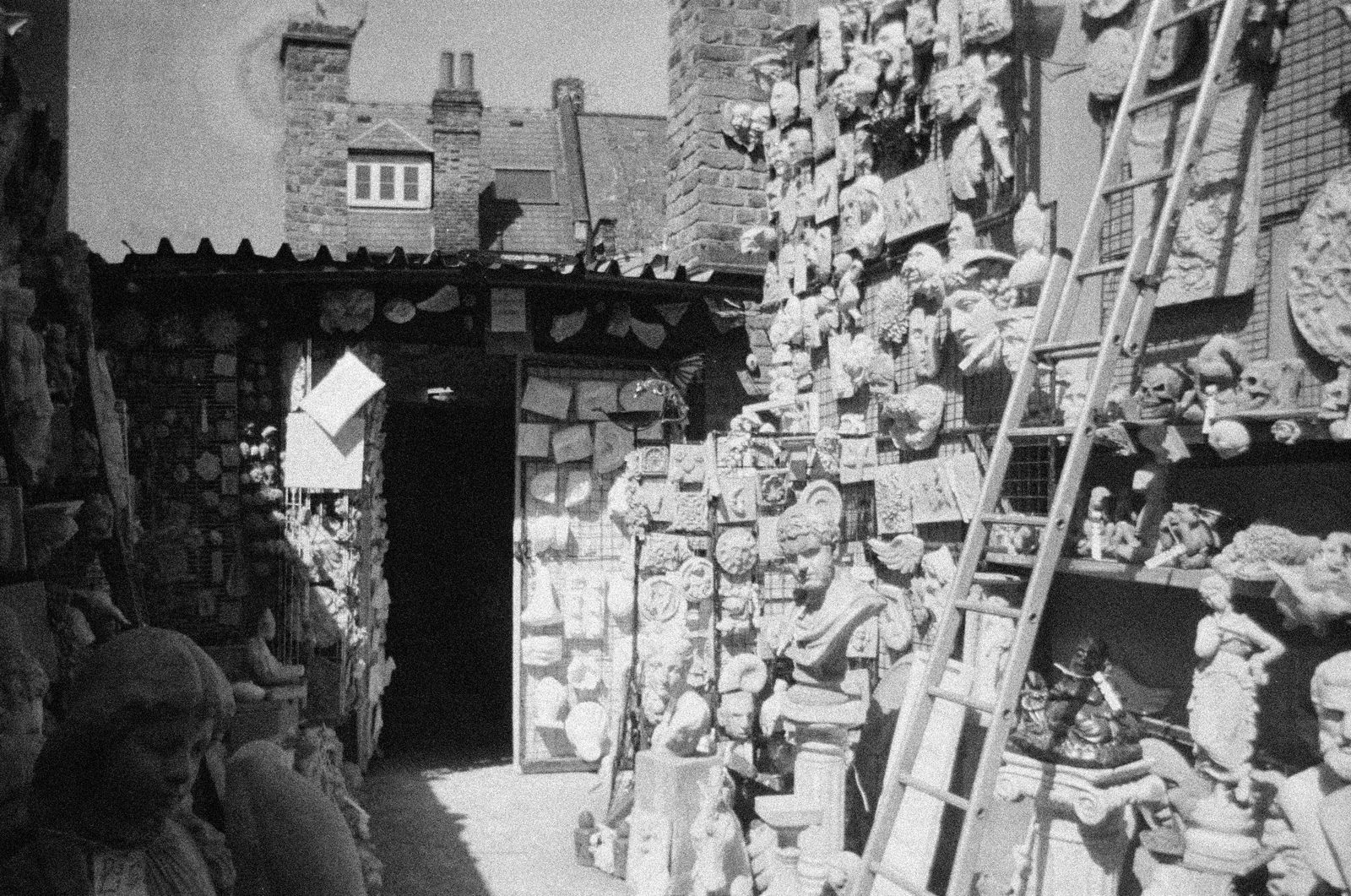
If you are a regular at Columbia Road flower market in east London, you will have perhaps come across Stoned and Plastered at 21 Ezra Street, a small road running parallel to it. It’s a rare breed of decorative shop: housed in a large, shed-like structure, it sells a vast range of stone and plaster-cast ornaments, both architectural and decorative, for the home and garden.
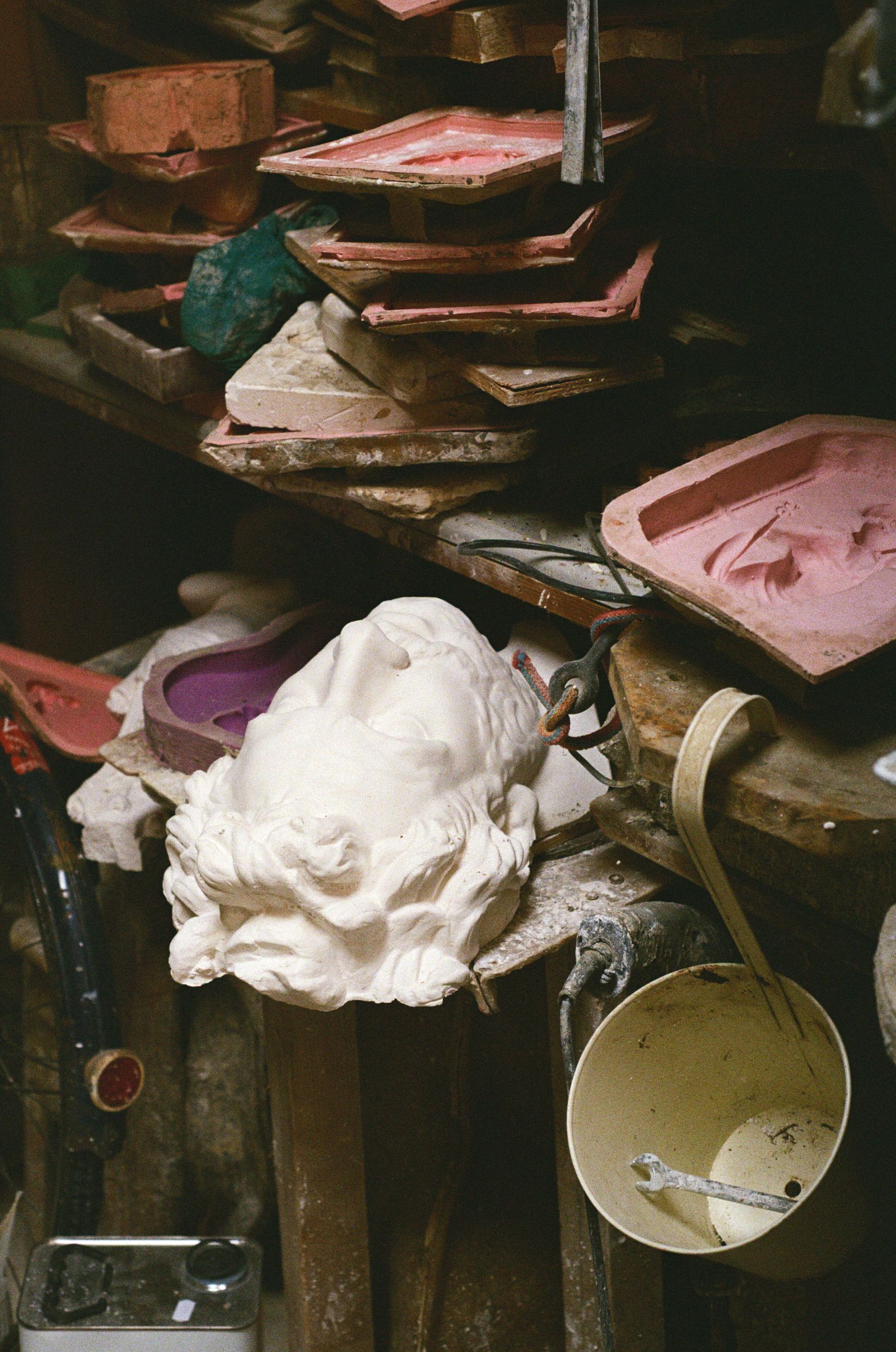
I have been visiting the shop for several years, but it wasn’t until I met Pete, the shopkeeper and craftsman behind it, earlier this year that I got the full tour. It opened as a workshop in 1987, and in the time since then its backroom has come to accommodate more than 1,000 moulds: ancient Grecian figures; Hindu gods; a famous fashion brand’s Medusa head; quirky genitalia with angel wings – a disordered, uncategorised ‘archive’ of reproductions that flattens hierarchical ideas around the value of objects and symbols.
This collection of moulds found its way here by different routes: the moulds may have been hand-crafted at the workshop itself, found and purchased from other artisans or, most surprisingly perhaps, donated or purchased from the plaster rooms of some of London’s most prestigious institutions. But unlike in a museum, the homogeneity of objects – they’re all made out of a single material – removes them from the order of value we might ascribe to the treasure rooms of an institution. It is perhaps for this reason that Stoned and Plastered is shutting its doors.
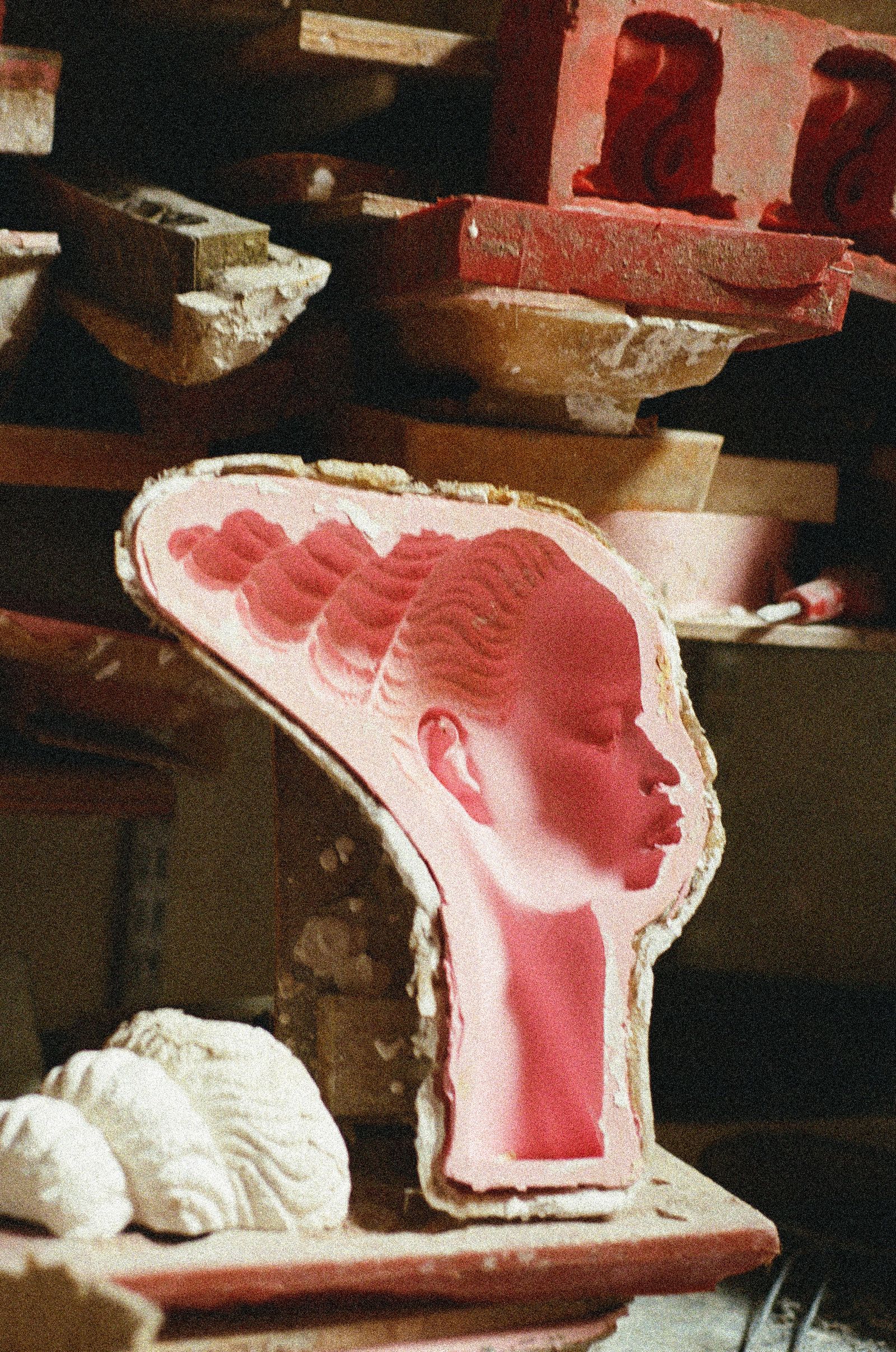
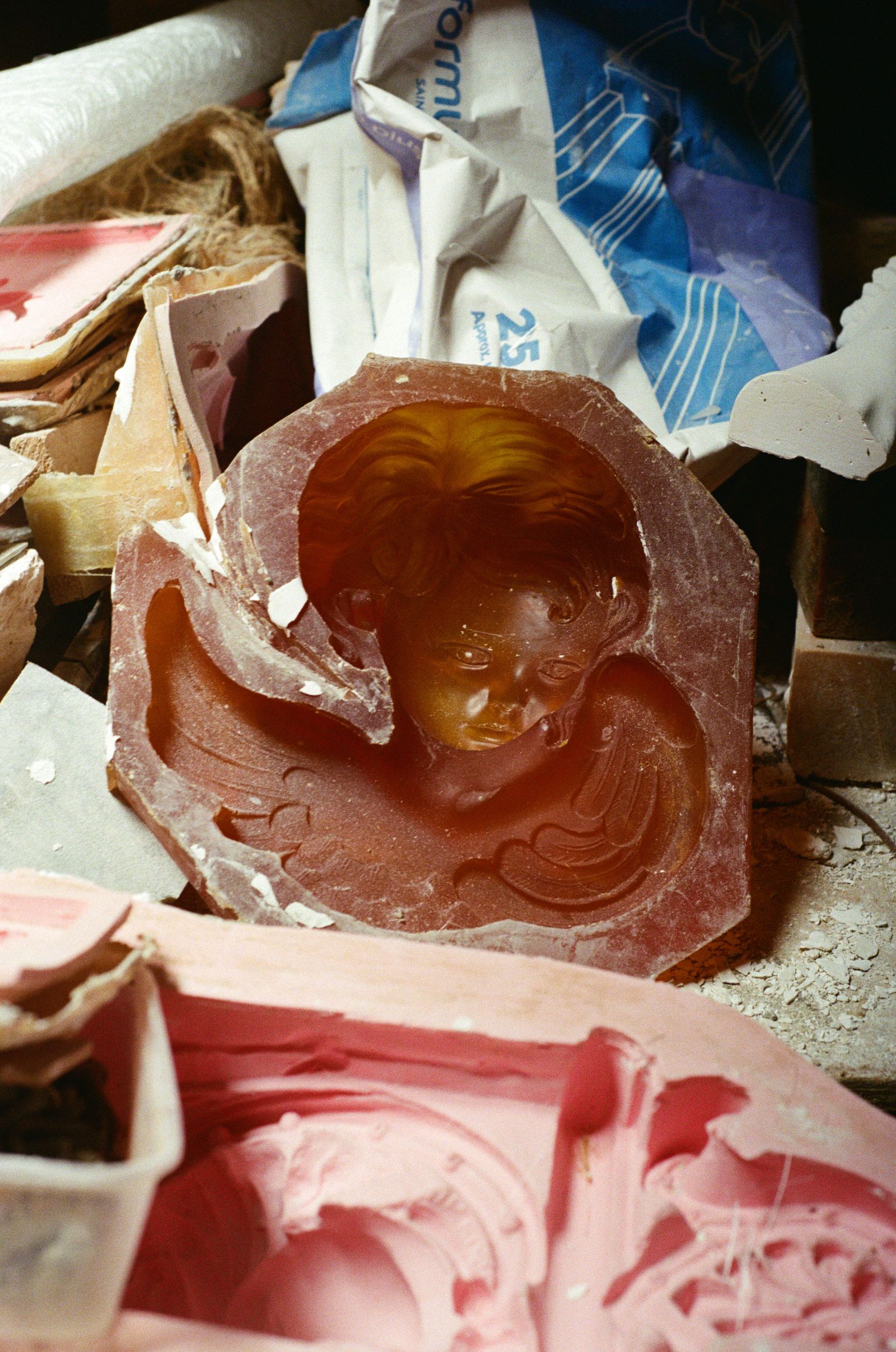
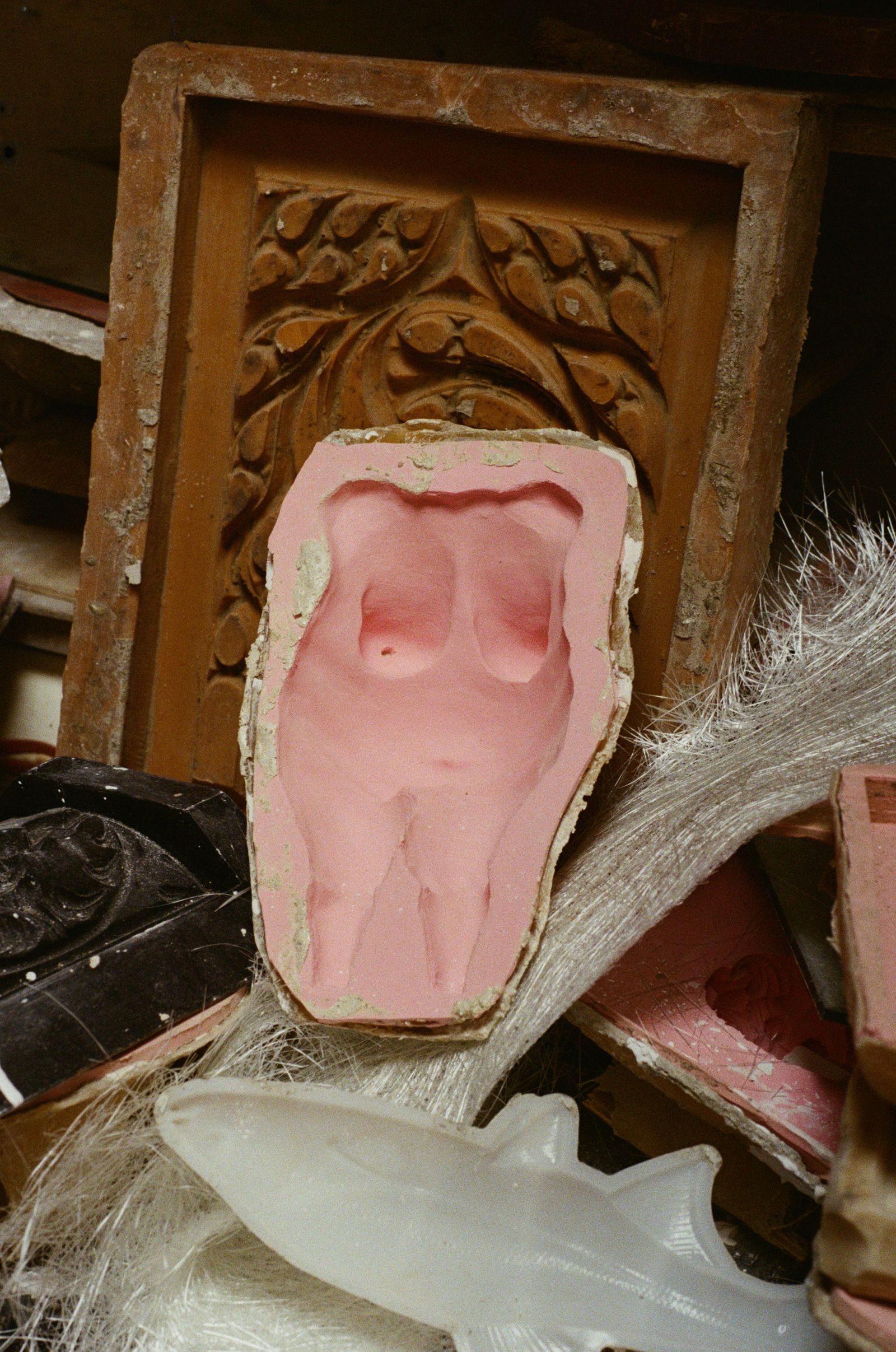
Over the last few months of business, I visited Pete several times to try to capture this fascinating collection and commemorate the craft of mould-making and cold-casting. We talk about the various functions a cast might have: display replicas in museums, architectural ornaments, decorative objects for the home or garden, props for sets, a way of preserving of history… Stoned and Plastered originally focused on architectural ornaments – with a large collection of cornices, ceiling roses and corbels – but it was later open to all sorts of requests. Pretty much anything can be cast with the right amount of patience and skill; Pete laughs about the number of people requesting to have their own bodies cast and turned into stone sculptures.
He also tells me about all the people who have passed through the workshop over almost 40 years, and the generosity of Kip, Stoned and Plastered’s owner, who offered the space to artists to work on their own projects. It was here, too, years back, that Pete was able to develop his interest in the craft when he opened his own shop. Meeting Kip, being welcomed into the workshop and being given the opportunity to watch and learn meant a great deal to him, he says. As well as all that, this was a space he could go in difficult times – somewhere to retreat and find focus.
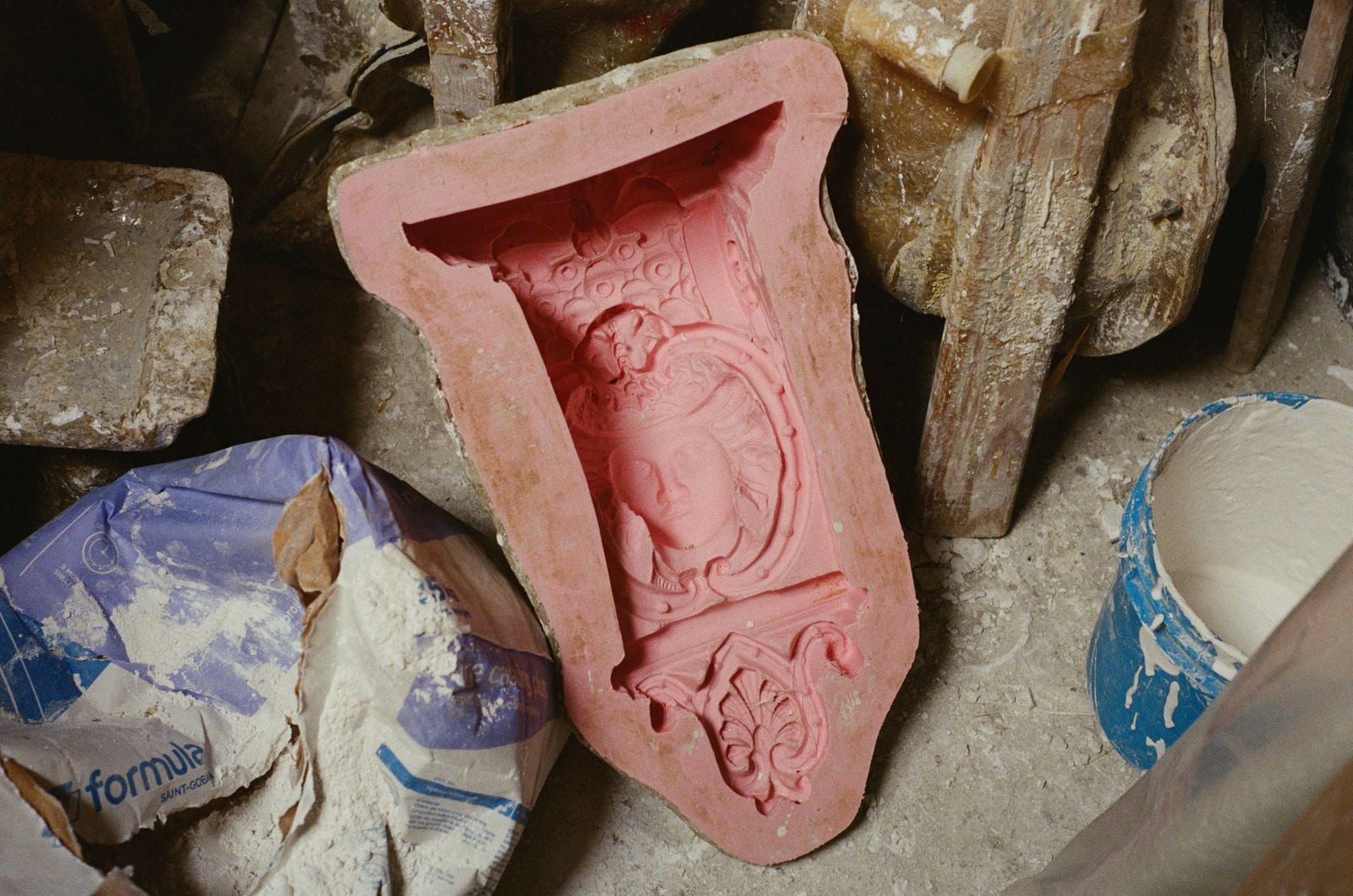
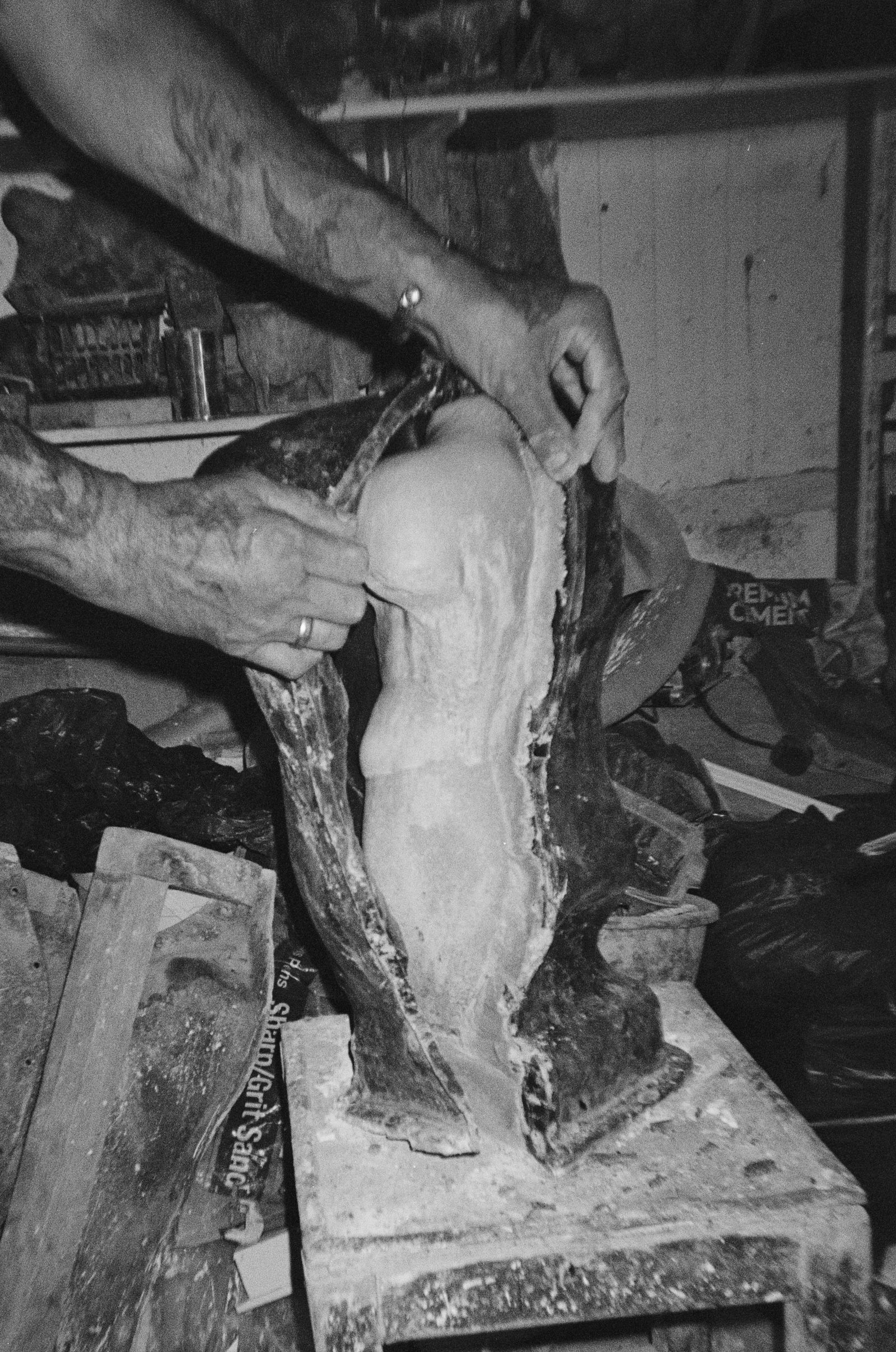
For many, making can be an incredibly valuable activity to help with mental health, cultivate a sense of purpose and structure, and offer a sense of community. At this moment in time, where physical labour and craft have become secondary to screens and online professions, the closing of spaces such as Stoned and Plastered feels particularly significant. Not just because of the objects that are made there, but because of the skills, knowledge and stories that are conserved in these places and passed on through watching, doing and spending time together. There is something exceptionally valuable about the workshop as a space where people can learn, experiment, make mistakes and develop a skill over many years. As the moulds are packed away, I think about where this knowledge goes, and what happens when we lose the spaces it can be shared.
Giulia Shah is releasing a publication commemorating Stoned & Plastered with Supporting Material in October 2026. Visit supportingmaterial.com





