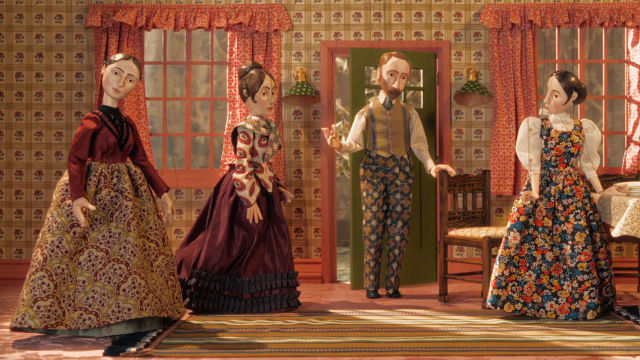



For his autumn/winter 2026 collection, London-based fashion designer Jawara Alleyne offered a profusion of brightly hued net and lace, swaddled by wool and waxed-cotton outerwear. An ode to nightlife, and the slouchy-over-slinky silhouette that characterises high-street queues and beer gardens during winter, it underlined the creative potential that our pubs, clubs and bars still hold – just about. Alleyne came up at PDA, a defunct club night held at Bar A Bar in Stoke Newington, described by Vogue writer Amel Mukhtar as a ‘Where’s Wally’ of the emerging British fashion scene. There, wrote Mukhtar, Mowalola Ogunlesi wiled out next to Maximilian Davis ‘before either designer had shown on a runway’, and IB Kamara often showed face prior to editing Dazed. The founders organised themed nights (‘wear a ballgown!’), which Alleyne credits with expanding his personal style: ‘Without a space to wear a dress, I wouldn’t have worn a dress.’
In this way, PDA calls to mind the Blitz Club, the wartime-themed wine bar in Covent Garden, which, on Tuesday nights in the 1980s, was taken over by Steve Strange and Rusty Egan. They hosted themed nights too (‘dress as your favourite blonde!’), spurring their fashion-conscious clientele to push boundaries, incubating the New Romantic movement in the process.
Night-time venues have long been laboratories of street style. At Tottenham Royal, Baroque-ish architecture and velvet drapery echoed the dandyism of the Teddy Boys who congregated there. At the Haçienda, a post-industrial interior framed the development of the Manchester baggy scene. And legend suggests that chilly ravers at a former Berghaus factory in Scotland made ample use of the cast-off clobber they found there. (Today, the brand is synonymous with British rave culture.) But our stock is depleting fast. Nightclubs are closing at three per week, with 461 lost since 2020. Pubs are folding at a rate of six per week, with more than 212 shuttered since the start of 2026. Youth clubs, once the first rung on the ladder of subcultural participation, have been hit hard too: data suggests that 1,243 closed between 2010 and 2023. And my, does it show in our style.
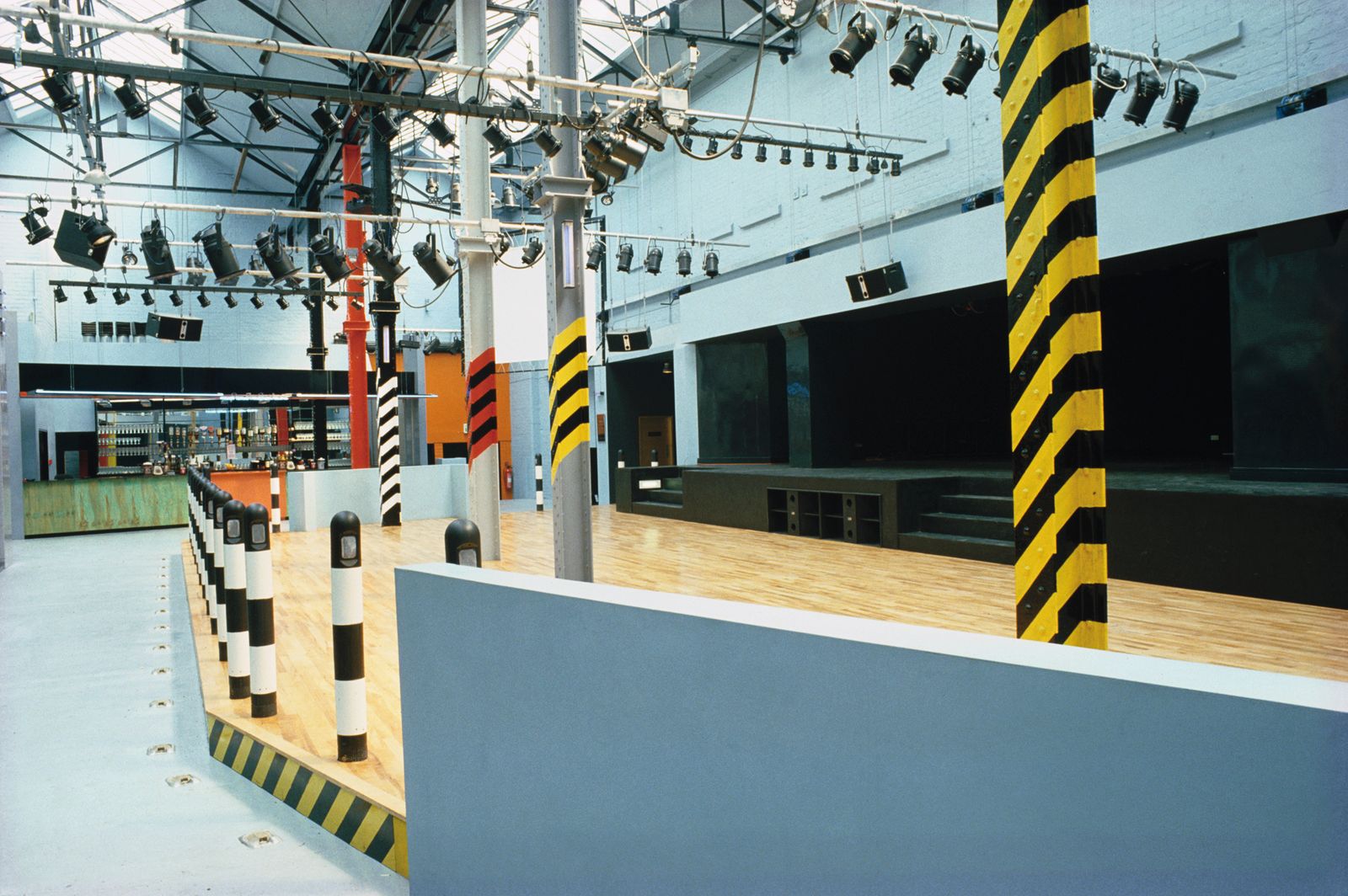
The average club does not, of course, boast inspiring Ben Kelly designs, as was the case with the Haçienda. (Alleyne notes that Bar A Bar’s boxy, subterranean dancefloor was more a ‘blank canvas’ for creativity.) But the spaces where we gather after dark can be uniquely catalytic. There’s the cross-pollination of ideas and experiences; consider the disparate styles that converged in punk, or the accidental meetings fostered by the Colony Room in Soho. But there’s also the freeing nature of a dimly lit room, the tension between losing yourself and performing identity, the way dancefloors allow you to really feel your body in a space. In the 1980 track ‘Bass Culture’, dub poet Linton Kwesi Johnson describes that sensation as ‘… di beat of di heart/ This pulsing of blood/ That is a bubblin bass/ A bad bad beat/ pushin gainst di wall’. Meanwhile, in her book about raving in New York (where nightlife is facing a similar crisis), trans scholar McKenzie Wark writes of dancing as ‘one of the few times this body felt at home’ pre-transition.
Fashion needs that feeling in order to thrive – the sense of abandon that begets true rule-breaking. (Significantly, both the Blitz Club and PDA were queer nights, places where that community could safely show up and show out.) And if you’ve been to the clubs that remain in the past decade, you’ll be keenly aware that social media has ruined all that. It’s impossible to shake a leg without a smartphone flash leaving you hyper-alert to the fact you’re being watched. Not to mention the homogenising effect it’s had on style.
So where does this leave us? Self-conscious, with nowhere to go and nothing to nourish our eye – just endless advice on how to achieve the perfect french tuck, slotted between photographs of Sade and the Bessette Kennedys. Fashion becomes inward, if not backward-looking.
From high street to high-end, references are prized over innovation, comfort over personal expression. Could Leigh Bowery, that avant-garde trail-blazer, have existed in 2026? Mindlessly absorbing the same images as thousands of others while sat on the sofa? Doubtful. Bowery didn’t design clothes for real life. Rather, like Alleyne, he created fantasy garments on the fly for places like Taboo, his short-lived club in Leicester Square, where the only thing gaudier than the mirror-clad walls were his costumes.
The digital age has thrown up a dizzying amount of visual identities, all manner of ‘-cores’ and e-people, many of which mimic bygone style tribes but lack the feeling that went with them, that physical rootedness. They position culture as something to be consumed, rather than something to participate in – a sentiment that resonates in institutional responses to the subject. The Blitz Club, Taboo and Leigh Bowery have all been immortalised in a slew of recent retrospectives. The Museum of Youth Culture will be opening in Camden (20 June). And this month, the V&A reveals a collection dedicated to London’s lost music venues. All are worthwhile pursuits – but, as the closures rack up, I can’t help but feel we’re archiving Rome while it burns. (Jamie Brett, creative director at that new museum, admits to having ‘existential crises about this at 3am’ – I’m reassured by the fact that he plans to host IRL youth clubs, and that its collection stretches to the present.)
Not every club can or ought to reach decades-long milestones, but we’re losing heavyweights and replacing them with ‘meanwhile use’ spaces. And, as Jawara Alleyne asked when discussing his latest collection: ‘If we have nowhere to dress up and go out, then what does fashion become?’ Apparently, a navy cardigan, a pair of straight-leg jeans and a Sophie scarf, if you’re feeling jazzy.
A version of this story appeared in the June 2026 issue of ‘The World of Interiors’. Learn about our subscription offers