

On a minor road at the edge of a Norfolk village, a thick hedge hides the domain of George Upwell. We are surprised when we visit by both his welcome and his well turned-out appearance. ‘Please come and sit down and have a cup of tea,’ he entreats us. Tall and thin, George has a crown of white hair, intense blue eyes, huge hands, and is as reserved as he is cordial. At the age of 74, he has just come back from a 145km walk with friends in the south of France. George is a potter and shed dweller out of choice for 30 years, with no running water, no electricity, no telephone and no loo – ‘a spade in the woods is fine,’ he says. If you want to see him you write a letter, and if he wants to know what is happening in the world he has the radio.
Born in England, he spent his childhood in South Africa. He brought up a family and taught science for ten years. He also studied dairy farming, and has done his fair share of plumbing, bricklaying and woodworking projects. ‘Over there you are self-reliant; here we produce specialists and that’s all,’ he argues. ‘The other day, a neighbour found a stag at the side of the road knocked down by a car and he didn’t know what to do. So we cut it up together.’ George was around 40 when he returned to Britain. At that time he was living alone, without much money. Rather than struggle in London, he decided he’d rather live ‘as a king’ in nature; so he bought a piece of wooded land in Norfolk, planted an orchard and made a vegetable garden. In a corner near the road there was a small brick agricultural building, measuring 3×3m. George moved into it. ‘There is a law that says that you can stay legally after four years if no-one has noticed you are there,’ he explains. To protect his secret, he went around by bicycle and did everything he could to remain invisible; in the fifth year, now ‘legal’, he built himself a shelter more to his liking, with tree trunks from his land, perfectly insulated with straw, hemp and lime for the walls, and sheep’s wool for the roof. The whole thing set him back £2,140.
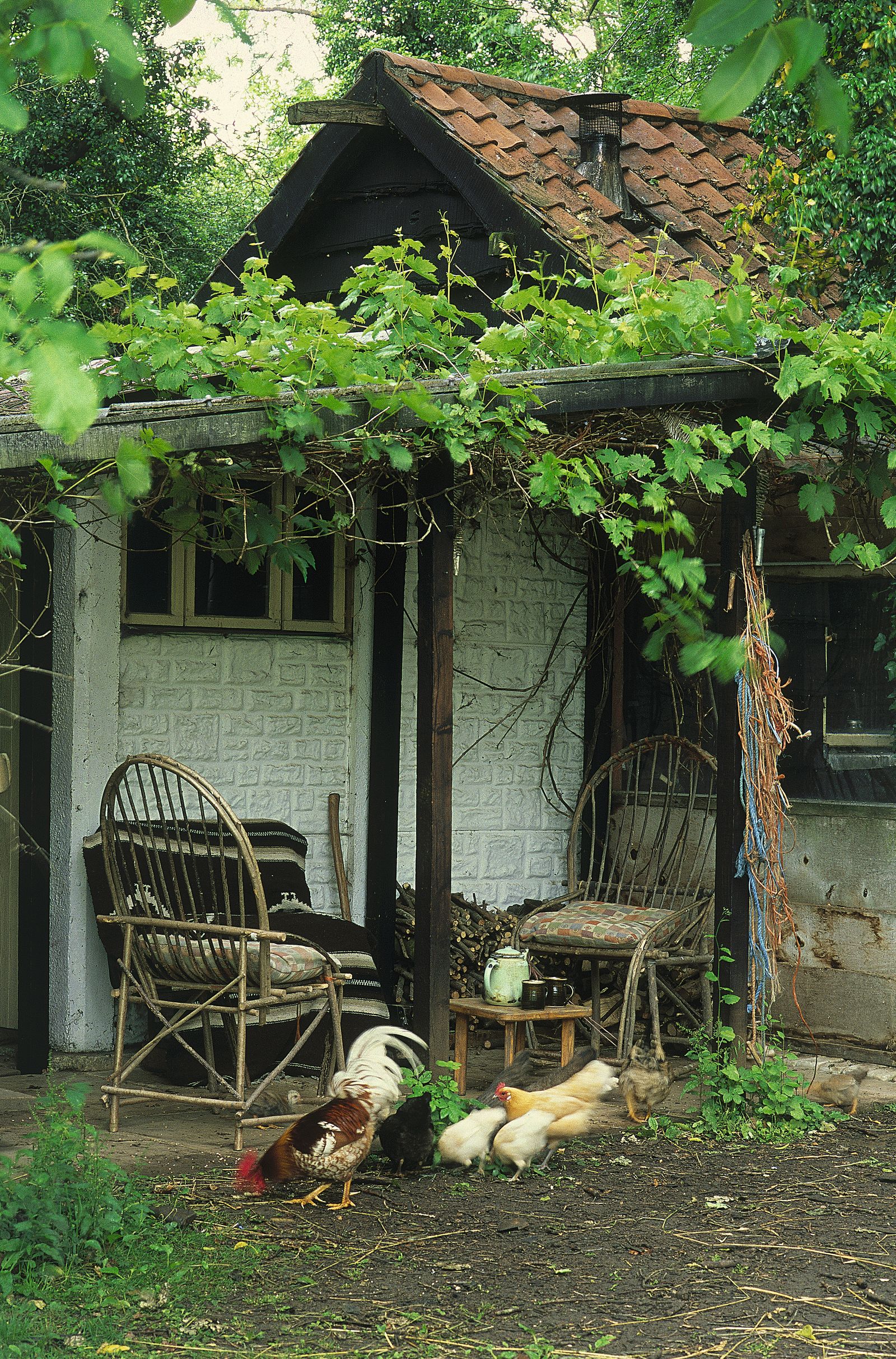
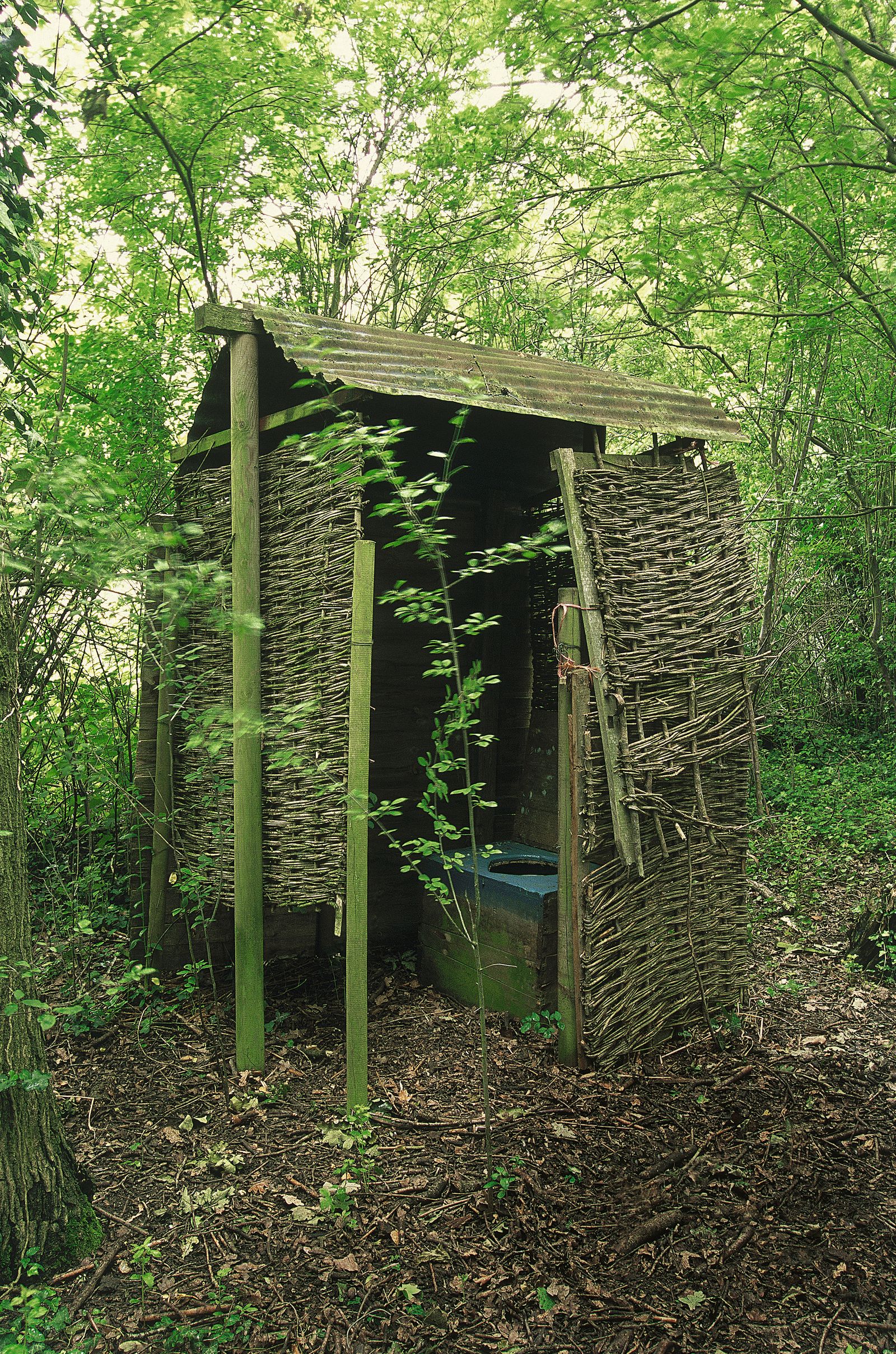
Later on, opposite this main cabin, George built himself a kiln and a pottery studio. Today he lets the small brick shack from the early days to a young couple, and has a 1960s caravan to put up his friends amid a mass of wild flowers. A little further off, in the woods, he has put in a ‘ladies’ loo’ for female visitors. George is far from being a hermit. He likes people. When the cider season comes (the apple trees that are now over 30 years old provide juice and 30 gallons of cider), everyone comes to lend a hand, providing an opportunity for socialising and celebrating.
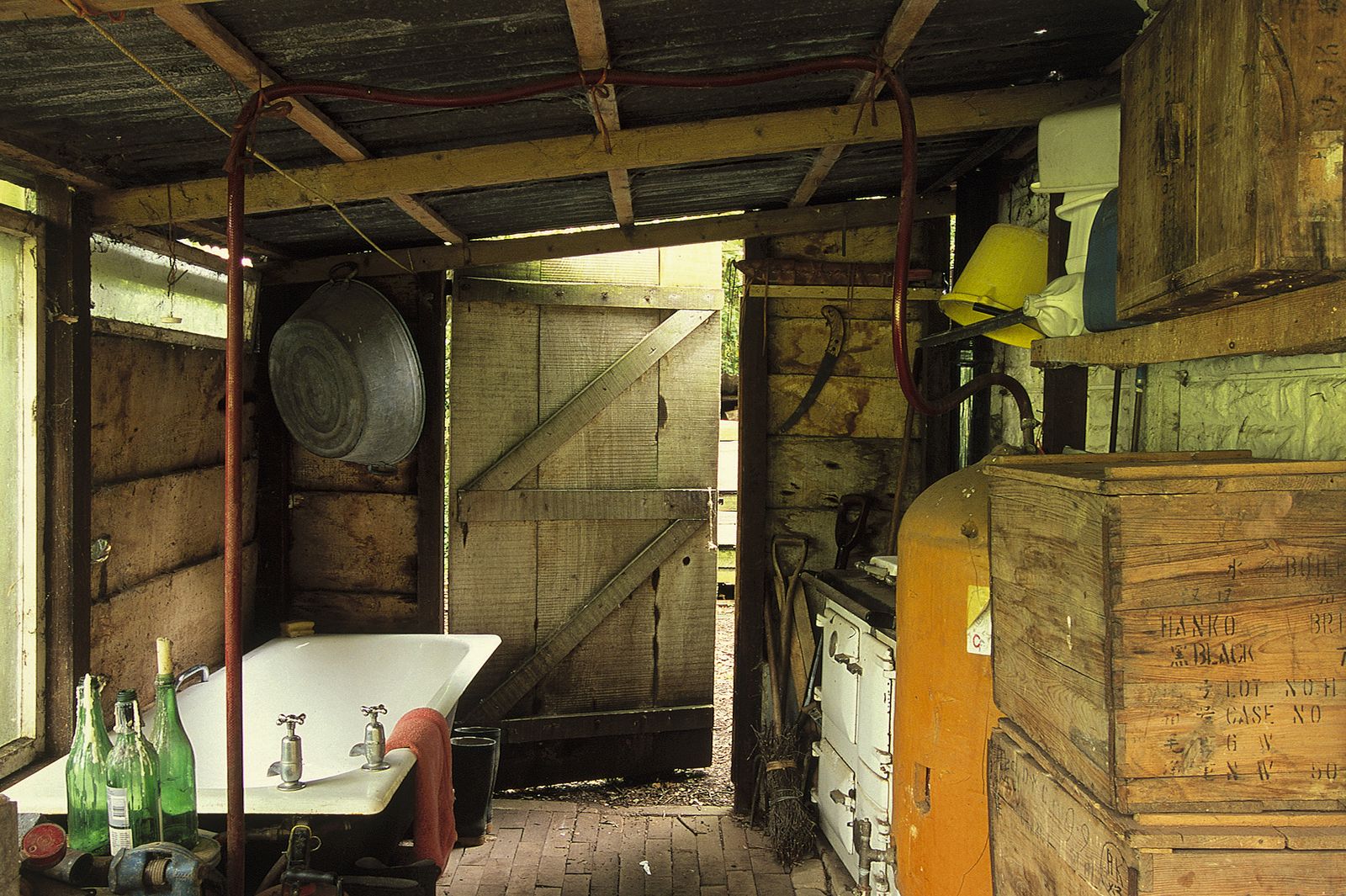
George’s cabin is almost totally camouflaged in the woods. Passing a sink connected to water tanks by a network of angled drainpipes, half hidden by panels of woven willow, you enter the rear of the dwelling proper by going through the bathroom. Its floor is made of oak offcuts, the roof of corrugated iron and there’s a vast claw-foot tub fed by a cylinder tank heated by an old wood-fired Rayburn. A system of pipes, ‘not elegant but cheap and efficient’, and a few candles complete the set-up. It takes three hours to heat the water. At the front, a creeper with generous foliage shades a veranda, where George serves tea, weather permitting, in homemade pottery mugs.
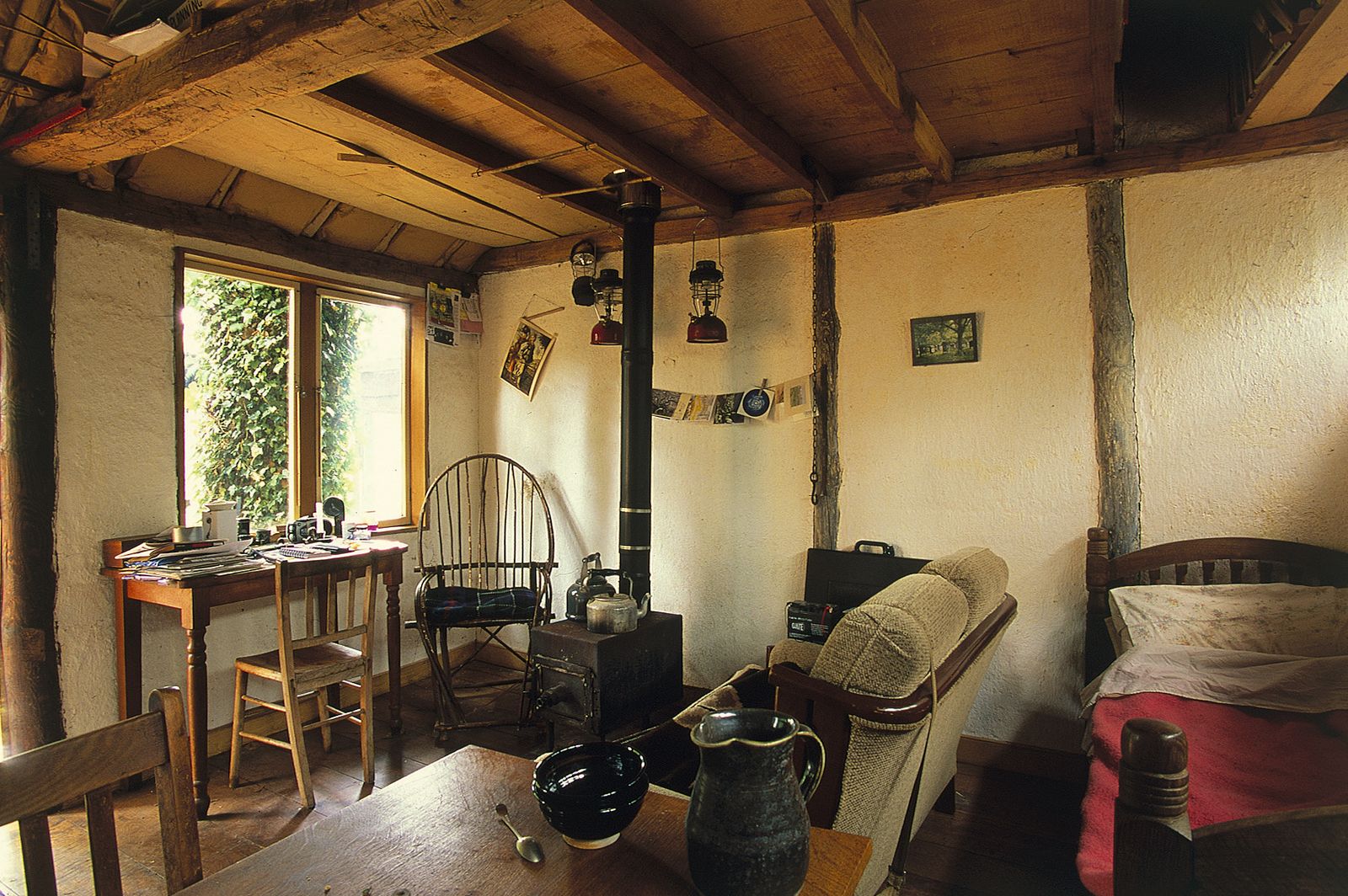
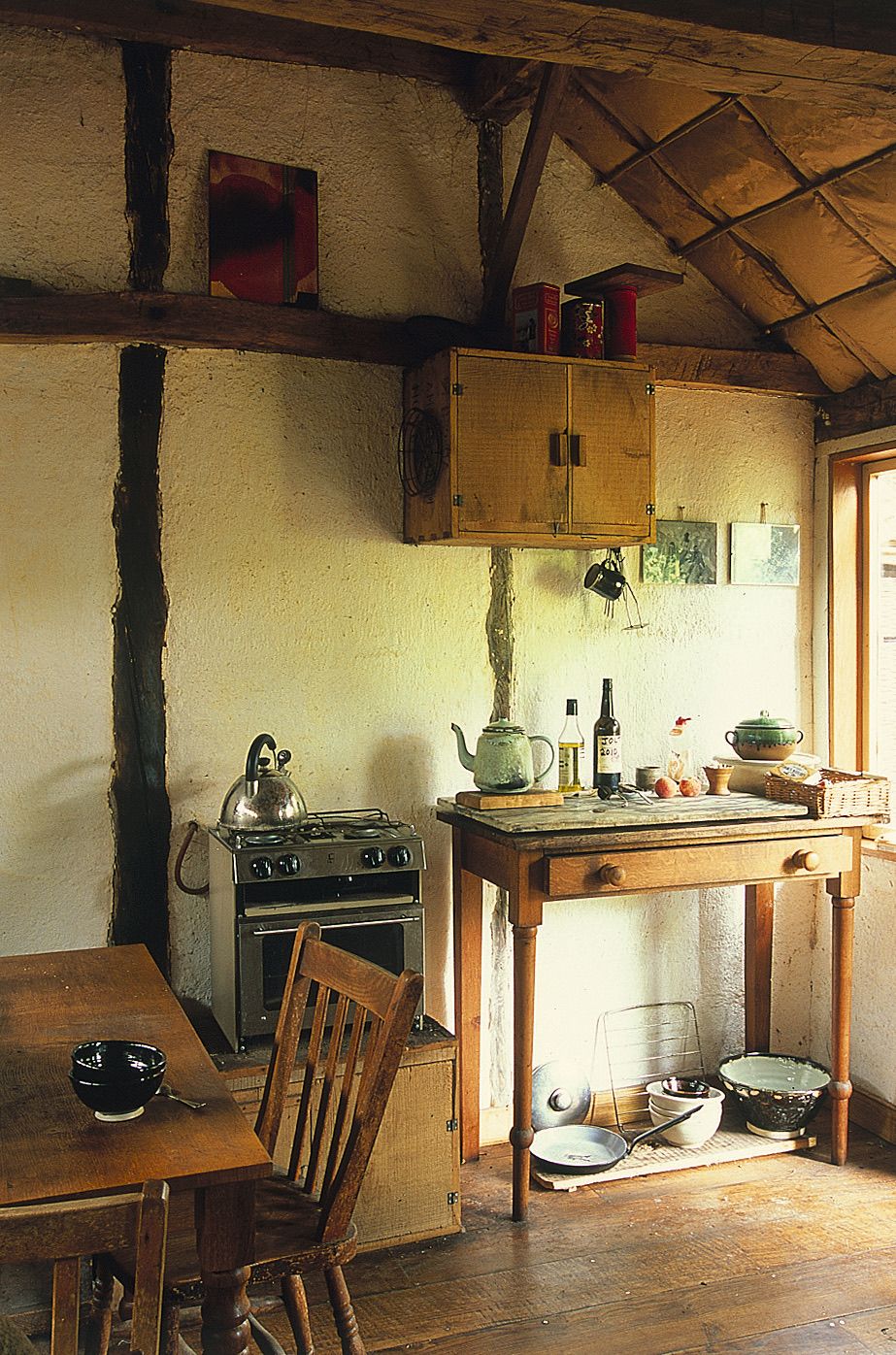
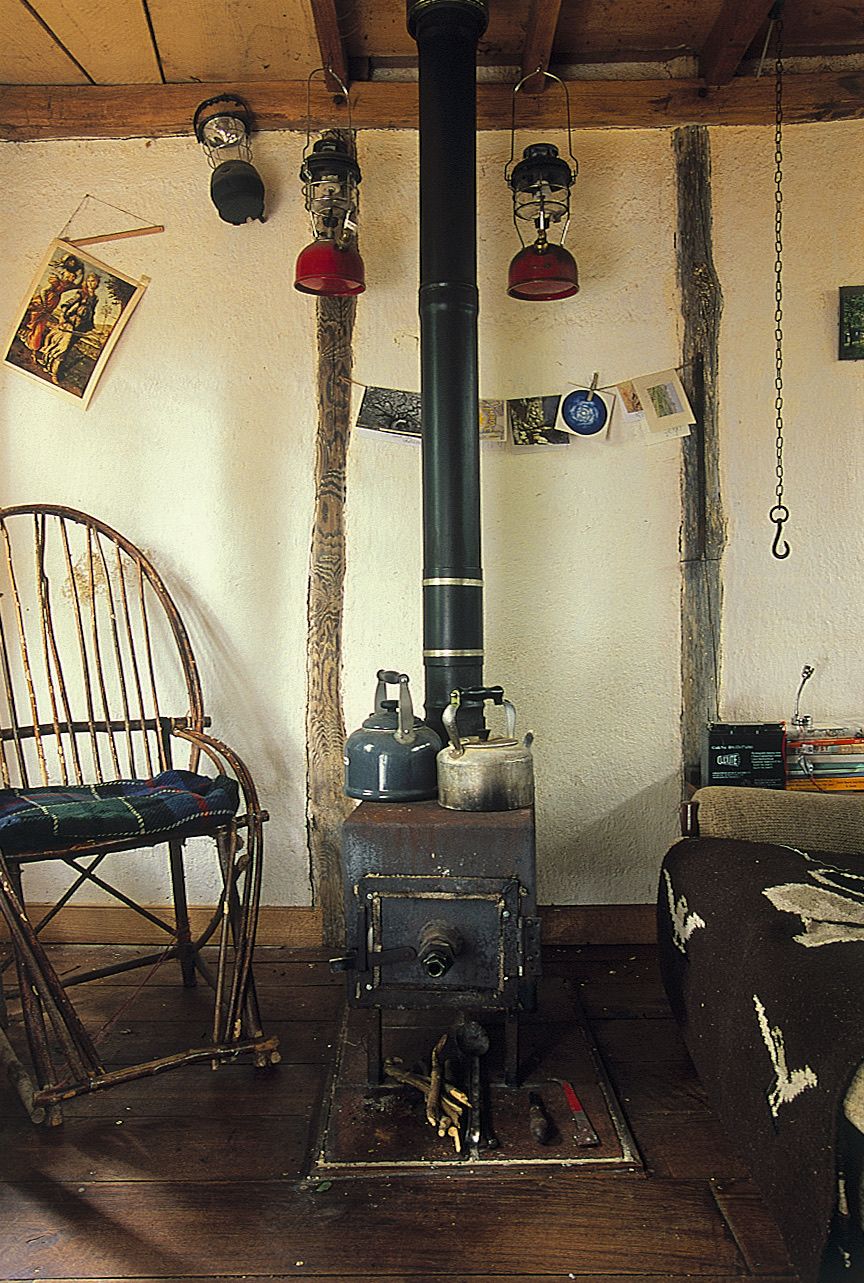
In his living room, measuring a mere 4×4m, a stove (on which water is constantly being heated) has star billing. Wicker armchairs made by George surround it, along with a sofa covered with a Peruvian poncho, which separates the space from a bed in one corner. There are two large windows. Under the first one, George has placed one of the three wooden tables he designed and made with the village carpenter; with an opening top, it serves as his desk. The second one is the dining table, with room for up to six people, and the third, marble-topped on very long legs to suit George’s great height, is the kitchen worktop. Next to that are a small cooker and a sink.
On the wall above the stove, a photo of beehives and a reproduction of Botticelli’s Primavera hang near some hurricane lamps. High up on a ledge are piles of files, archives and books. ‘At the moment, I’m reading a book about the Cape of Good Hope and another on the Mediterranean in the time of Philip II,’ George offers. ‘I love history.’ Reading is mainly a pleasure for winter, when the temperature forces him to stay indoors.
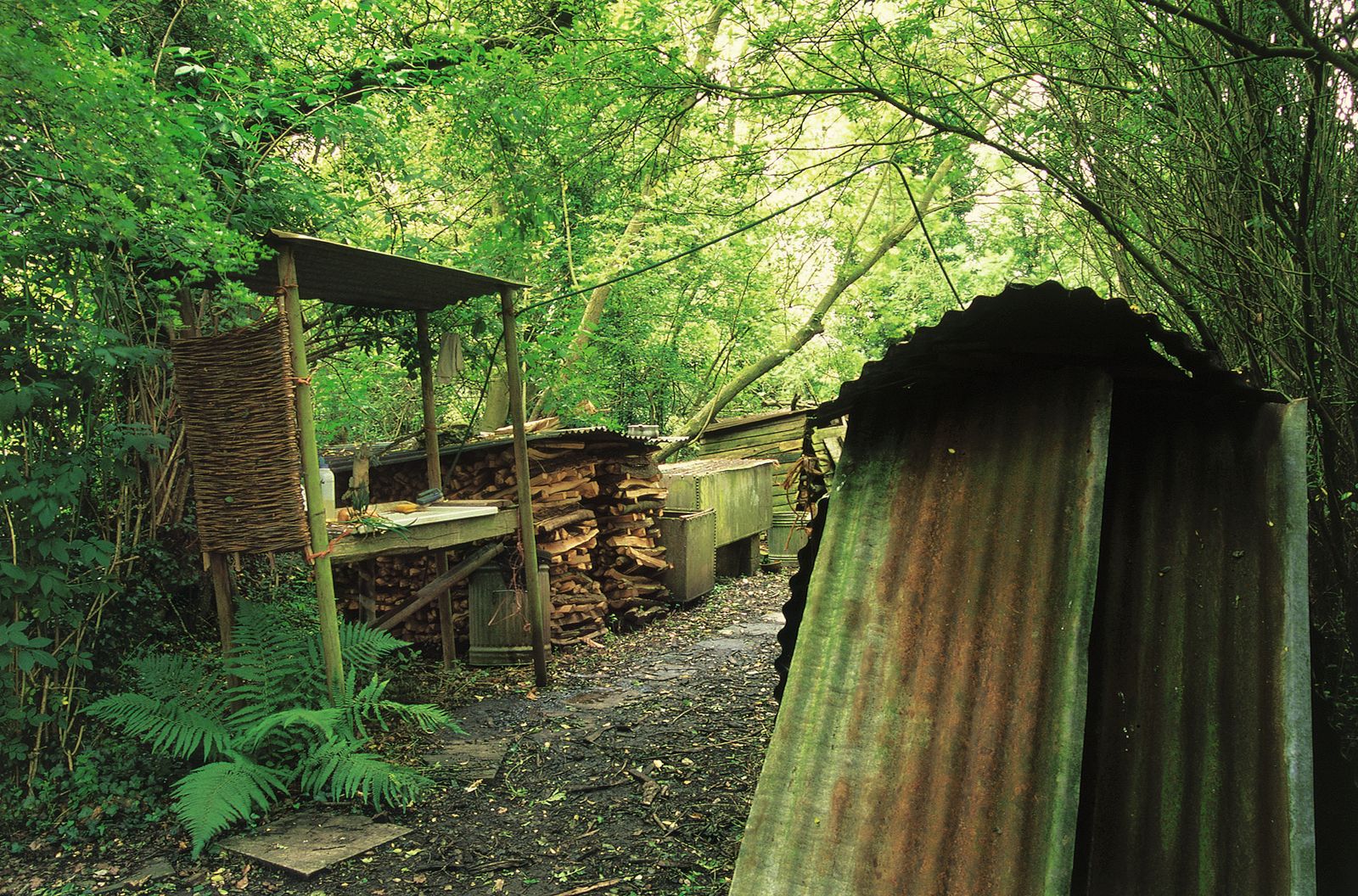
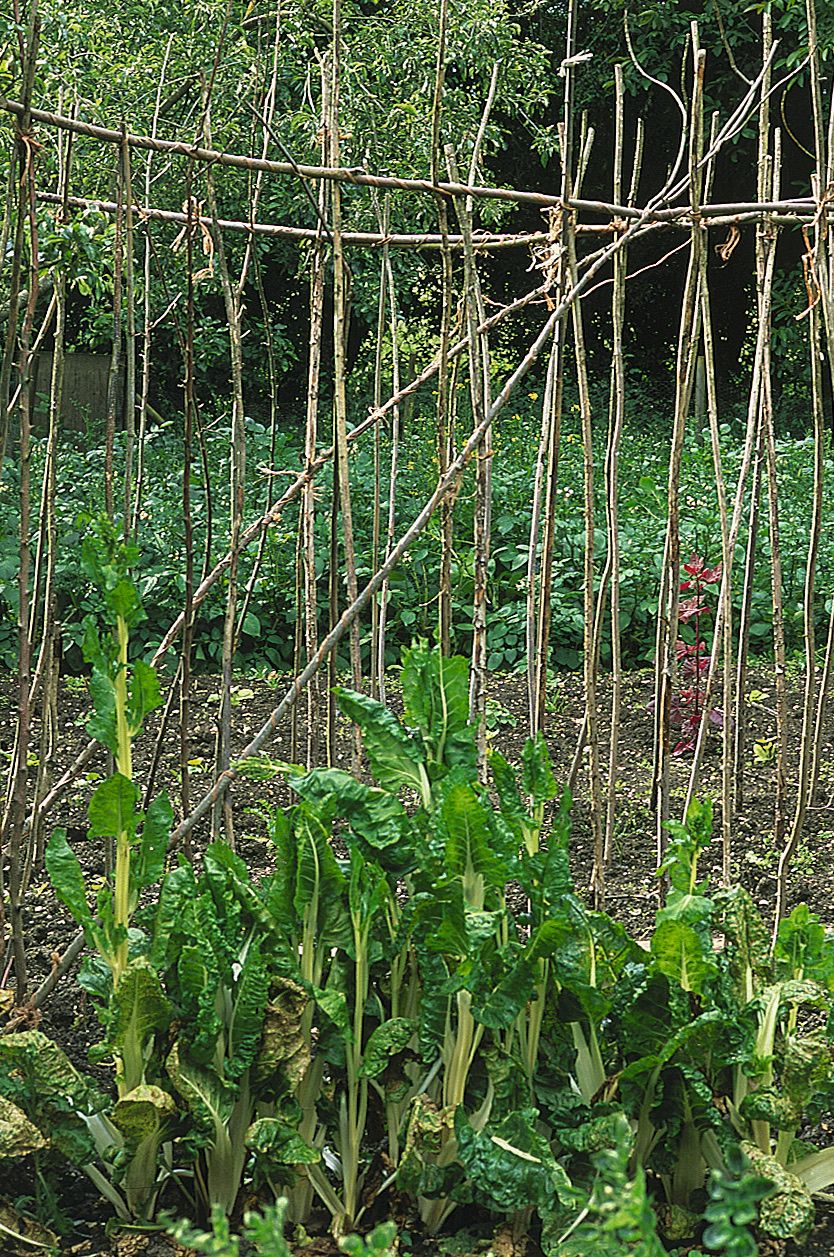
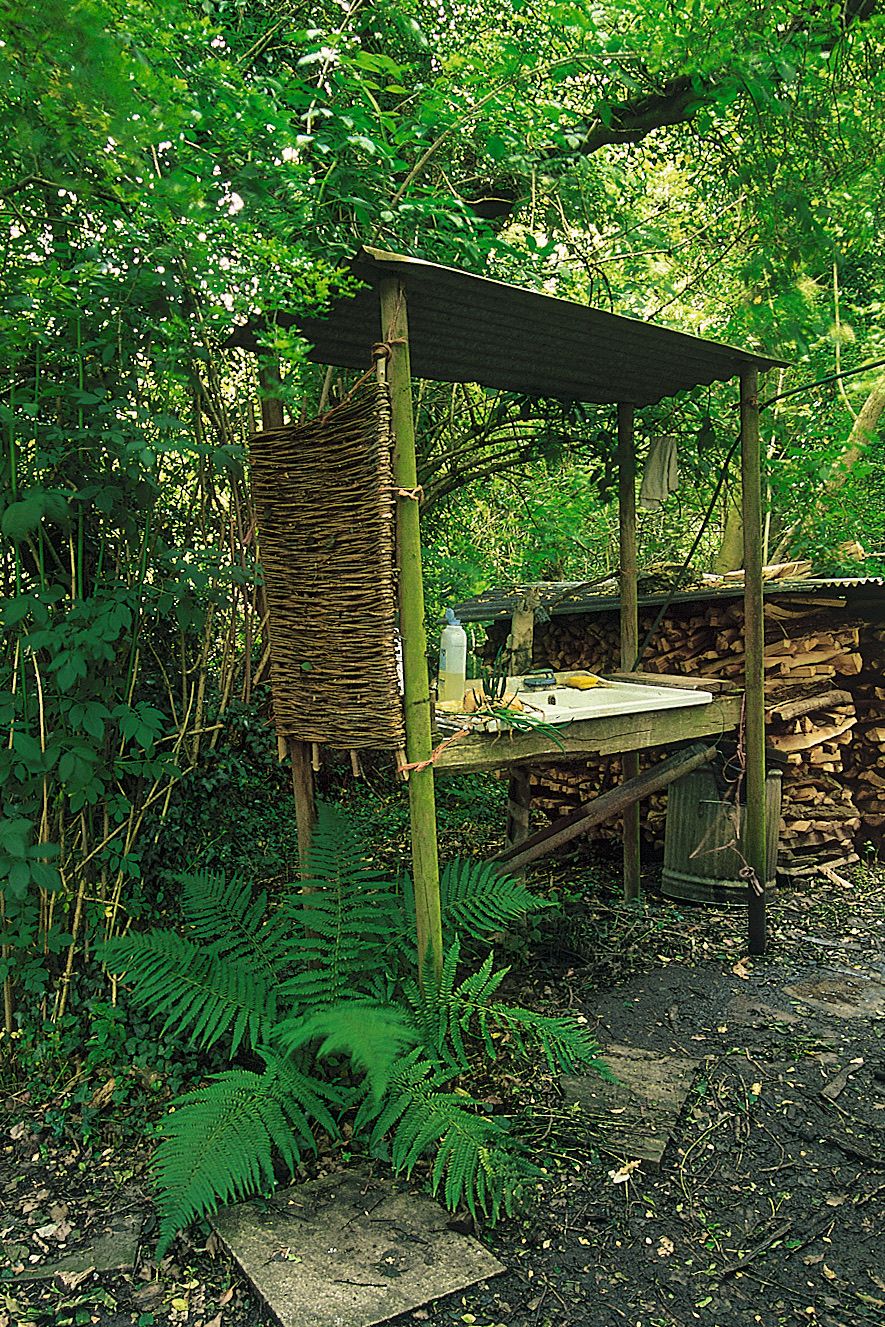
Outside, the vegetable garden has to be tended, the hens looked after, the gutters and water tanks cleaned, the damage caused by storms and rain repaired... It takes George over two hours each winter day and half an hour in summer to gather, cut, saw and sort by size the wood, which he stores in small meticulous piles like installations, with corrugated-iron roofs to protect it from bad weather. The wood is needed to keep him warm, for the bath, the kiln and to make bread twice a week. ‘I begin with twigs of ash from which I make charcoal in an iron can,’ he explains. ‘It takes quite a long time. I need exactly 120g of charcoal to cook my two loaves of bread in an old stove under a tree. You are aware of what you are using; it has helped me save gas.’ When George has finished all his maintenance, if the cold leaves him with any agility in his hands, he finally allows himself to do some pottery.
In living this way, George explains, ‘I hope to express my love of freedom and contempt for the values of the career bourgeoisie. Millions of British people cannot afford financialised housing, nor its various clones such as “eco-housing”, “affordable housing” or “low-impact development”. Therefore let the pressure build, welcome the social explosion when it comes and rewrite the planning laws and building regulations to accommodate the poor, not the millionaires.’ In perfect harmony with his small invisible hamlet in which everything is in its place, George Upwell works methodically without ever letting himself be overwhelmed. He is a sensible man, and perhaps even a happy one.
A version of this article also appears in the September 2013 issue of ‘The World of Interiors’. Learn about our subscription offers