To understand Casa de la Torre means understanding Cuernavaca first. An hour south of Mexico’s capital, the city, known affectionately as ‘Cuerna’, became an unlikely haven for intellectuals, artists and cosmopolitans during the mid-20th century. It promised a slower life, outside American and European metropolitan convention. In 1959, Woolworth heiress Barbara Hutton built a Japanese-inspired residence here; two years later, artist and collector Robert Brady purchased the converted 16th-century Franciscan monastery that would become Casa de la Torre. Together, the houses embodied Cuernavaca’s appeal as ‘the city behind walls’: a place where outsiders reinvented themselves within secluded estates, and private residences became gathering points for international communities.
That sense of retreat still lingers. Blink and you’ll miss Brady’s house, distracted by locals eating tamales outside on stone benches. Casa de la Torre (established as a museum in 1990, four years after its owner’s death, aged 58) hides behind a giant burnt-orange wall. Its namesake three-storey tower peeps above, added for astronomical observation by the bishop who lived there at the turn of the century. Carved cedar doors lead into one of Mexico’s most singular homes. Furnished with over 1,300 objects collected across Brady’s annual travels, the residence was both a rendezvous for a wild array of visitors (Rita Hayworth! David Hockney! Maria Callas!) and an insight into one man’s astonishing curatorial and aesthetic vision.


The building backs on to Catedral de la Asunción de Maria, one of Mexico’s oldest and most majestic cathedrals (built in 1525, it was eventually sold by the government after the revolution). Once in Brady’s hands, the house became a stage for pleasure and creativity rather than monastic contemplation: its colonial stone courtyard now host to extravagant tertulias – social gatherings with artistic overtones – where a guest might break into song, wine glass in hand.
Brady was an unlikely owner. Born in Iowa, in 1928, he began collecting aged 13, displaying no interest in the family trucking business. Following studies in fine art and art appreciation, he travelled extensively, lived in Venice and eventually bought the crumbling former monastery in his adopted ‘spiritual home’. He funded its restoration and expansion, adding a pool and new wing for a studio and guest bedroom. The result is a theatrical mélange of colonial architecture, folk and fine art and religious iconography. Valuable works by masters like Diego Rivera and David Alfaro Siqueiros hang near a Navajo rug, votive paintings, Cherokee masks and a Moroccan hunting horn; Brady cherished them all. This refusal to separate fine art and craft reflects the teachings of his mentor, Albert C. Barnes (founder of the Philadelphia art foundation of the same name), whose unconventional ‘ensemble’ displays paired Medieval sculpture with kitchen utensils and Picassos with yarn spinners. Casa de la Torre adopts a similarly democratic eclecticism.


Shaped by Brady’s identity as a cosmopolitan gay man, his home became a container for an alternative domestic life: one of chosen kinship rather than nuclear family. Brady curated guest lists as he did his environment – with exuberance – mixing Broadway stars and royalty, German psychologists and dancers. Everyone from singer Engelbert Humperdinck to the last queen of Italy came through his doors. Traces of these friendships run throughout the casa. There’s a framed invitation to the opening of the Rufino Tamayo museum from Tamayo himself. The eminent Mexican painter was Brady’s confidant. Upstairs, the Yellow Room is a tender memorial to friendship. Dedicated thematically to women, it houses a vast portrait Brady painted of Peggy Guggenheim (his former neighbour in Venice) and a shrine to Josephine Baker. Such was his adoration of the dancer that they cemented their non-romantic partnership by marrying in Acapulco. He then dedicated an Orientalist-themed bedroom to her with maximalist interiors: Persian paintings of twirling dancers and shell niches (one of Baker’s costumes was a skirt covered in mechanical shells).

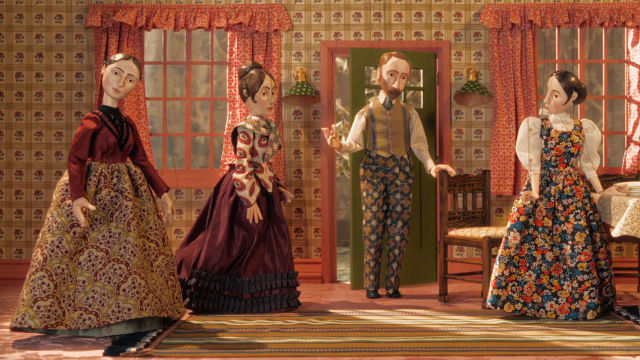
A collection of hand-painted ceramic figures in the cantina expresses Brady’s chosen family best. Perched in an arch above a wraparound bench are models of Maria, his cook, Mexican comedian Cantinflas and Peggy Guggenheim again, signature glasses on her nose. A figurine resembling Brady perches in a nearby alcove, his slim moustache and curved hairline finely replicated. Faded party photographs give further insight: there’s one of him and his Oscar-winning neighbour, Helen Hayes, grinning side by side and another from 1984 with an open-shirted David Hockney, smoking over dinner.


This was Brady’s exquisitely curated private universe, full of his most beloved people and art. He was free to exhibit Haitian folk art above Talavera tiles in the bathroom, and beaded doves made by the Mexican Huichol atop a Bamileke beaded stool from Cameroon. It’s impossible to ignore the privilege of a life lived collecting in this way, a home filled with ethnographic artefacts and sacred ritual items displayed at Brady’s discretion. The poolside loggia exhibits some of these unusual objects that played backdrop to his hosting: ritual combs from Suriname, Nigerian fertility statues and low, wooden kings’ thrones from Ivory Coast. One photo shows Christmas lunch here in 1969, pre-Hispanic statues shadowy in the background.
‘This was Robert Brady’s sanctuary,’ says Sergio Moreno, the house’s guide of 30 years, ‘a refuge for all’. More than a museum of objects, Casa de la Torre preserves a way of living: one of queer reimagining that valued artistic exchange and friendship above all else.

For more information, visit museorobertbrady.com